

Pirates in the System: How They Appear, What Determines Fleet Composition, and Why You Should Fight Them
Pirates in the System: How They Appear, What Determines Fleet Composition, and Why You Should Fight Them
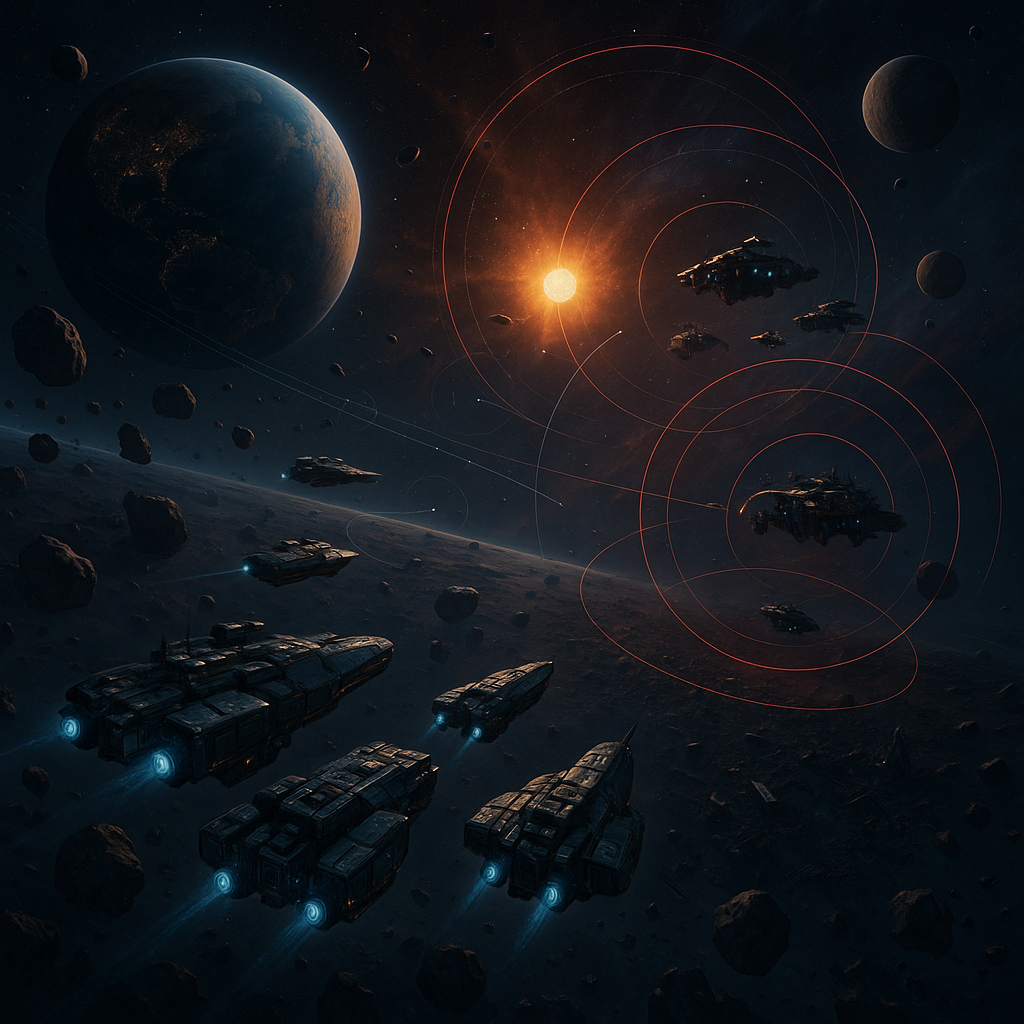
Pirates in War for Galaxy are not just decorative markers on the map or random noise to ignore. In game logic, these are autonomous pirate fleet reconnaissance groups: independent combat formations appearing in planetary systems with active players. They don27t belong to other commanders, are not NPC empire fleets, and do not act as anyone27s hidden army. Their role is simpler and more practical: to create a living PvE challenge where the galaxy is truly developing.
For a space-based online strategy, this mechanic is especially important. In browser strategies, players often get stuck in a calm loop: mines, research, accumulating fleets, rare sorties. Pirates disrupt this inertia. Even if you don27t want to attack neighbors, aren27t ready for a prolonged PvP conflict, and don27t seek personal wars with alliances, there may still be a target in the system where you can test your combat fleet.
At the same time, pirates should not be seen as a guaranteed profit button. They bring almost no combat rating, but after battle they leave debris like a regular fleet. The outcome of a specific attack depends on your strike force strength, enemy composition, losses, chances of ship recovery upon victory, and whether you manage to send Collectors to recycle debris. So it27s better to view pirates as a PvE combat economy training tool: you learn to assess risk, calculate consequences, and understand when an attack really makes sense.
When Do Pirates Appear: Checks Every 4 Hours
The first important point: War for Galaxy pirates do not appear every minute and do not respawn instantly after the last fleet is cleared. Their refresh is tied to a server check. According to the knowledge base, pirates can refresh once every 4 hours server time. This means hunting them is not about constant map updates but about understanding the schedule and probabilistic generation.
At a fixed time, the server runs a check on planetary systems. It reviews not the entire empty galaxy but those with active inhabited planets. The logic is clear: pirate activity is maintained around a living game economy, not in coordinates where nobody develops or creates military activity.
Simply put, the process is: first, the server check window arrives. Then the server analyzes systems with active inhabited planets. For each such system, it checks if there are enough pirate fleets relative to an internal norm. If fewer pirates are present than should be, the server may add new flotillas. But the number added isn27t fixed: it27s random, from zero to the full required amount.
This last point often raises questions. If a system "should" have more pirates, it does not guarantee that after the next 4-hour window you will see the exact number of new targets. The server might add some of the missing fleets, fill the quota completely, or add none at all. So if you cleared a sector, waited for a check, and saw no new pirates, it does not indicate an error by itself.
There are also strict limits. Pirates don27t spawn in empty systems. They don27t spawn where there are only banned or "dead" planets. Also, alliance multi-accounts don27t affect pirate spawning: they cannot be used as bait for generating PvE targets. If you plan to hunt regularly, focus on real active inhabited planets of normal players and don27t check the map every five minutes expecting instant respawn.
What Determines Pirate Fleet Composition
Once the server has decided a new pirate fleet can appear, the second step starts: determining the exact flotilla composition. It27s important to clear a common myth here. The pirate27s composition does not depend on the star or sun color of the system. Star color in War for Galaxy is decorative and does not affect game parameters. Pirate fleets are also not tailored to a particular player27s preference nor are they meant to be convenient targets specifically for your current army.
The key factor is the average combat power of all inhabited planets in the system. The server looks at the sector's overall combat level, not just your colony, the weakest neighbor, or the largest nearby fleet. Because of this, the same mechanic can feel very different in different coordinates.
In a beginner system with almost no ships and low military level, low-rank light pirates generate. The knowledge base gives examples: fighters, shuttles, transports. This doesn27t mean you can attack without calculation, but such targets suit early training: players see how fleet combat works, how losses occur, and why debris collection after victory is important.
In a developed system, it27s different. Strong fleets, including Colossi, mean mostly powerful pirate fleets appear. Examples of heavy pirates include frigates, bombers, and Colossi. For mid-stage players, this is no longer "easy prey" but a real test of fleet composition, especially if you find yourself in a system lifted by stronger neighbors.
This logic makes pirates part of adaptive PvE balance familiar to browser strategy, galaxy games, and space combat game players: the greater the military life of a sector, the more serious the PvE threats. But adaptability does not equal personal guarantee of an easy fight. If you27re new to a system with strong fleets, local pirates may be far more dangerous than targets in a starter sector.
For risk assessment, it helps to remember conditional combat power. This hidden parameter estimates outcomes when comparing fleets. If one fleet27s conditional power is higher, it usually has the advantage; with a fivefold advantage, the winner generally suffers minimal losses. But this estimate isn27t an absolute calculator. In War for Galaxy equal conditional strength does not guarantee equal results: armor, shields, weaponry, range, firing arcs, and fleet setup matter.
Why Fight Pirates: Debris and Practice
The main practical reason to attack pirates is debris fields. After battle they leave debris like normal fleets, becoming resources for recycling. But again, 27can27 does not mean 27guarantees profit.27 If losses are too high, if you misjudge threat, or forget to collect debris, the sortie easily becomes an expensive lesson.
Debris doesn27t have a fixed lifetime. It exists until recycled or until server restart. This lets you plan but isn27t a reason to delay collection: another player can scoop the field, and server resets can end its existence. So normal pirate hunting is nearly always planned in two parts: strike fleet destroys the target, then Collectors go on a 27Recycle27 mission.
Important: only Collectors can recycle debris. Other ships can27t perform this function. Neither transports, combat ships, nor 27whatever27 will replace specialized collection. If your economy lacks ready Collectors or they are far away, much of the battle27s benefit may be lost.
The second reason to hunt pirates is training. Pirates serve beginners to practice fleet ratios for victory. They let you test how light ships perform in numbers, why medium ships better clear light targets, when heavy ships truly justify themselves, and why relying solely on a high total power number is risky. This is valuable because you gain combat experience without directly attacking live neighbors or triggering PvP response chains.
However, pirates are not replacements for PvP and barely help in combat rating races. Player combat rating is Elo-based and gained from real PvP battles; pirates are mainly practice and debris sources. They teach combat understanding but don27t make you a top-ranked player by themselves.
Practical Tips Before Attacking
Hunting pirates seems safer than attacking players but shouldn27t be blind. Key feature: pirates are immune to espionage. You can27t scan them or get exact intel beforehand to fully plan an attack. So preparation relies on indirect signs: system27s overall level, presence of strong fleets, your toughness, and strike fleet quality.
Rule one: don27t send an expensive fleet simply because it27s expensive. A strong fleet in War for Galaxy isn27t always the costliest set, but the right combination. Different ships penetrate armor differently, absorb damage, attack from different arcs, and shine at various ranges. A one-sided setup won27t save you, regardless of cost.
Rule two: don27t build a 27mono-type armada.27 Mono fleets are easy to produce and manage but each class has weaknesses. Mixed composition reduces risk that pirate fleets exploit your vulnerabilities. Light ships help against heavy ones when in numbers. Medium ships better clear light targets. Heavy ships excel against large targets and defenses. Bombers counter defense buildings. Galactions are important against skill-flying fleets. The Colossus is powerful but costly, slow, and needs support; sending it alone just for big number impresses is risky.
Rule three: plan for losses. Destroyed ships only repair after victory, according to recovery chances. Losing battles means no restoration. So sorties against unknown pirates should have a margin, especially in systems with average power higher than yours.
Rule four: prepare Collectors beforehand. Winning without debris recycling feels like lost profit. If you intend to attack pirates, check where Collectors are, how far they need to fly, and if you have fleet slots for consecutive actions. Good hunts treat combat sorties and debris collection as one coordinated plan.
Rule five concerns alliance infrastructure. Alliance multi-accounts can27t attack pirates: attempts trigger 27Alliance Code forbids attacking Pirates27 error. Multi-accounts don27t affect pirate spawns either. So if you develop alliance planets, don27t count on them for pirate farm or spawn tools.
Summary: Pirates as an Indicator of System Strength
To sum the mechanic with three main rules, the picture is clear. War for Galaxy pirates refresh every 4 server hours. The server checks systems with active inhabited planets. New pirate flotilla composition depends on the average combat power of all inhabited planets in the system. So weak sectors usually have light targets, while systems with Colossi and strong fleets see far more dangerous guests.
Their value isn27t in quick combat rating growth. Pirates are a regular PvE tool: a way to practice cosmic battles, test fleet setups, witness consequences of mistakes, and harvest debris if wisely fought and collectors sent promptly. This mechanic smartly links fleet, economy, and tactics: you don27t just click 27attack,27 but go through the full combat decision cycle.
Want to check what27s happening in your systems? Visit the official War for Galaxy site, log into the game27s web version, or explore available login methods on the download page. Prepare a balanced fleet, don27t forget Collectors, and view pirates as a chance to become sharper, more cautious, and stronger in the real galactic war.