

Alliance Planet Capture in War for Galaxy: Who Can Take Territories and Why Regular Attacks Don't Change Ownership
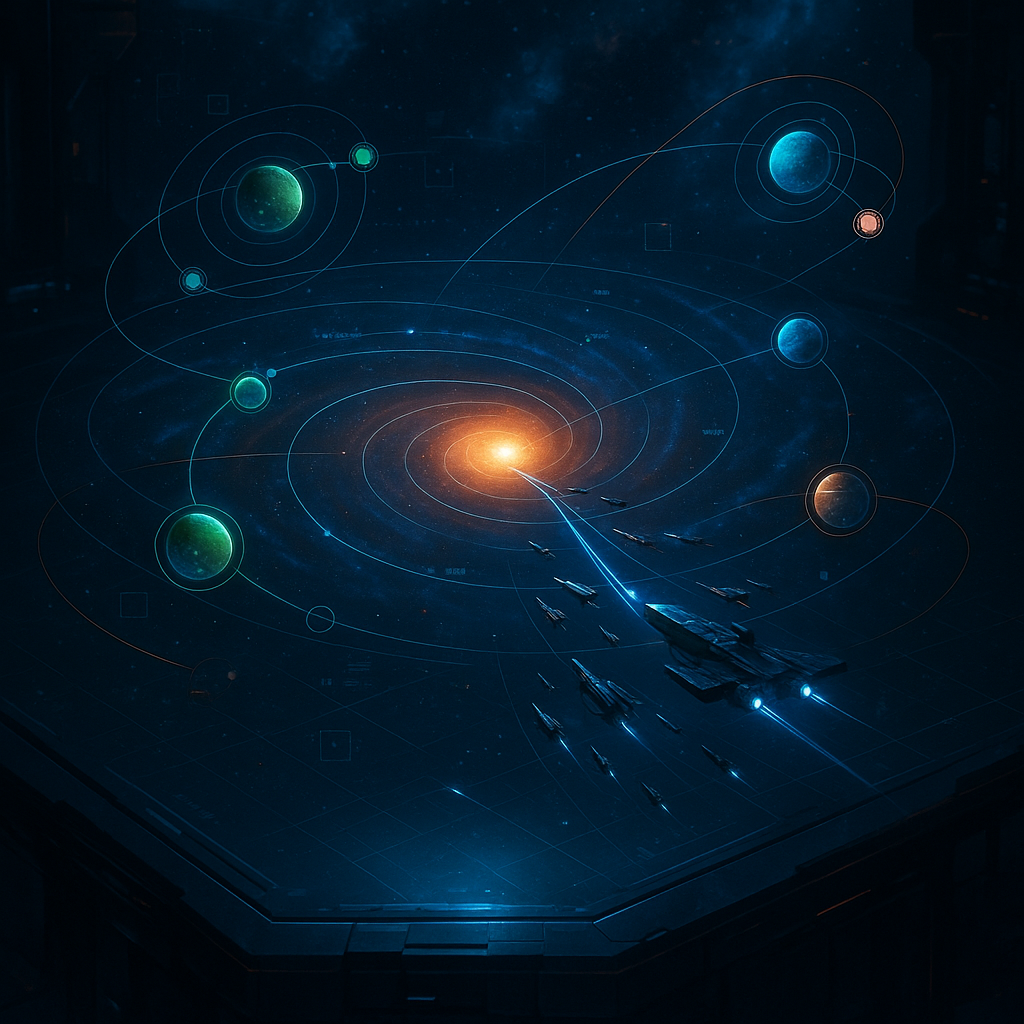
Alliance Planet Capture in War for Galaxy: Who Can Take Territories and Why Regular Attacks Don't Change Ownership
One of the most common scenarios in War for Galaxy looks like this: a player spots a planet belonging to a foreign Alliance, assembles an attack fleet, sends an assault, wins the battle, destroys ships and defenses, takes the loot — but after the report the planet still remains with its previous owner. It seems as if the victory didn't work. In reality, the system works exactly as it should: the combat result of an attack and the change of territory owner are different mechanics.
From a regular account, you can attack enemy planets, win space battles, break defenses, and if successful, take half of the resources from the target. However, a personal account cannot completely destroy or capture another player's planet. This is a raid, plundering, economic pressure on the opponent — but not a territorial redistribution of the map.
The same rule applies to alliance planets. If you attack an Alliance planet from a regular account, a standard attack with looting will occur. Even if the attacker wins, the ownership of the planet will not change. The defender's fleet may be broken, resources may go into the victor's holds, but the Alliance flag on the map will remain the same.
The real capture of alliance planets is only available to Alliance multi-accounts — and only against planets of other Alliance multi-accounts. This rule separates regular raids from territorial wars, system control, and ranking. For War for Galaxy, as a galaxy game at the intersection of space games, browser strategy games, online strategy games, and space combat games, it’s important not just to win the fight but also to understand who is attacking, what the chosen target is, and whether the operation has the right to change planet ownership.
Alliance, Multi-Account, and Alliance Planet: Basic Concepts Before Capture
To avoid confusion about the mechanics, you first need to separate personal gameplay from collective war. A regular account is your personal empire: your planets, your buildings, your fleet, your raids, and your development decisions. An Alliance is more than just a chat with friends or a decorative label next to a nickname. It's a union of players that creates a shared Alliance multi-account to capture and control territories in the galaxy. More about the project can be found on the About War for Galaxy page.
Alliance multi-account is a shared account for the Alliance, accessible by its members. It is not meant to replace the players’ personal empires but to fulfill specific collective tasks: capturing and holding alliance planets, warring against other Alliances, controlling systems, and expanding influence on the map. If an action is performed not from the multi-account, it is not considered a full territorial operation, even if it looks similar to a regular attack.
The multi-account differs from a standard player account in several ways. It has no home planet, cannot delete planets, Marauders do not appear, it doesn't affect pirate appearances and cannot attack pirates. Attempting to attack pirates results in the error "Alliance Code forbids attacking Pirates." Also, Missions, Shop, Profile, and Reward Calendar are not available to the multi-account; there are no free tokens for Hermes; and reports cannot be deleted.
However, the Alliance multi-account has features useful specifically for map warfare. For example, the "Navigation" technology provides an increased fleet slot bonus: +2 instead of +1. This matters for large operations because more slots mean more maneuverability, reinforcement, and pressure options on contested systems.
Alliance planets on the map are marked distinctly and differ from regular player planets. This is a visual hint: you face a collectively controlled object. Therefore, the basic rule is simple: a personal account is for empire development, raids, and supporting your Alliance, while the Alliance multi-account is for operations that truly change territory.
How Real Capture of Another Alliance Multi-Account’s Planet Works
The correct capture scenario doesn't start with selecting the largest fleet but with choosing the right control mode. If you are in your personal account, you can attack and loot resources, but you cannot take the planet. To change ownership, you must act from the Alliance multi-account.
- Open the Alliance account via the corresponding button in the interface. This step is mandatory: capture is considered an alliance operation, not a personal attack.
- Select the target — a planet belonging to another Alliance multi-account. A regular player’s planet is not suitable for such capture, and empty planets are settled using different mechanics.
- Send a fleet from the multi-account to the chosen target with the standard attack mission.
Here lies the key nuance. In the interface, the mission is called a standard attack, but territorial results occur only if two conditions are met: the attacker is an Alliance multi-account, and the target belongs to a different Alliance multi-account. If either condition is not met, what you have is a normal combat action, not a capture of another multi-account's planet.
Then everything depends on the battle. If the attacker wins, the planet changes ownership to the attacking Alliance. This is a full change of owner: buildings, defenses, and infrastructure become the new owner's property. The Alliance rating increases by the cost of the captured planet, and the attack organizer's fleet remains on the planet.
The last point is often underestimated. Capturing a planet is only half the operation. After victory, you must hold it, and immediately after the battle, the fleet of the attack organizer stays on the new territory. If the organizer left a too weak residual force, the freshly captured planet can quickly become a target for a counterattack.
If the defender wins, the attacking fleet is destroyed, and ownership remains unchanged. There's no partial capture or disputed status: a lost fight means the territory remains with the original Alliance.
There is also a peaceful way to expand. An empty planet can be occupied by an Alliance only from the multi-account: send a Pioneer to the empty planet with the "Colonization" mission, and upon fleet arrival, it will become the property of the Alliance multi-account. Similar logic is used when creating an Alliance under new rules: you need one Pioneer. In the "Alliance" → "Create" window, specify the name and coordinates of the empty planet; after clicking "Create," the Pioneer departs from the active planet, and the Alliance is established upon arriving at the target. The game can be launched directly in your browser via play.warforgalaxy.com.
Regular Attack on an Alliance Planet: What You Can and Cannot Do
Returning to the question that usually causes confusion: why doesn't a regular attack capture the planet? Because a personal account is not a subject of the Alliance's territorial control. It can fight, help, raid, destroy fleets — but cannot rewrite the owner of an alliance planet.
A regular player has several legitimate scenarios for interacting with alliance planets. Fleets with the "Transportation" mission can be sent to planets of their own Alliance to deliver resources. Also available is "Relocation" — through which a player transfers ships into the Alliance's ownership, i.e., into the Alliance multi-account.
For planets of foreign Alliances, a regular player may send a standard attack. This will be a full battle: losses, victory, destruction of defenses, and looting are possible. But regular attacks from a personal account on an Alliance planet do not change its ownership even if the attacker wins. Such operations may be useful as raids or preparatory pressure but are not captures by themselves.
It is also important to remember the other side of transferring ships. Relocation from a multi-account to regular planets is not available: multi-accounts can only receive ships, not transfer them to regular players. It is impossible to transfer troops to another player in any way. When we say "transferring ships to the Alliance," it means transferring ownership to the Alliance multi-account, not gifting a specific ally.
From the perspective of online strategy games and space MMO game logic, this division clarifies the map. Personal accounts develop their own empires, participate in battles, and help the Alliance with resources or fleets. The collective territory belongs to the Alliance multi-account level. Therefore, a regular attack can hit an enemy alliance planet but cannot change its owner.
Joint Attacks, Organizer’s Fleet, and Disputed Capture Situations
In major wars, a lone fleet rarely strikes. Alliances coordinate joint attacks, provide reinforcements, time arrivals, and assemble a strike force. But in capture mechanics, it is important to distinguish the organizer from joined fleets.
If a joint attack is launched from the Alliance multi-account on a planet of another multi-account, and other fleets joined it—including regular player fleets—the joined fleets return to their home planets after the battle. They help win the battle but do not become a permanent garrison for the new territory.
Only the organizer’s fleet remains on the captured planet. Therefore, the organizer must not be just a "flag" to launch the operation but a real force ready to hold the planet after victory. In real time strategy and space combat games, such details often decide the campaign outcome: you can win the battle yet immediately lose the gained ground if unprepared for defense.
There is a special case with the home planet. If the multi-account's fleet flew to attack following the multi-account → multi-account scheme, and the starting planet was captured during the flight, the fleet loses the ability to return and flies "one-way." In case of victory, it captures the target planet and stays there. If defeated, it is destroyed.
But this rule does not apply equally to all missions. If the fleet was assigned a task implying return, and the home planet was captured during flight, after completing the mission it still returns to the original coordinates and only then engages in battle. Before a big operation, it’s wise to clarify within the Alliance three things: who organizes the attack, which fleet remains on the planet if successful, and what happens if the starting point is captured during departure.
Why Alliances Capture Planets: Ranking, System Control, and Economy
Capturing alliance planets is not just a flashy fight between fleets as in spaceship games. It's a way to change the galaxy map. An Alliance gains more than a mere marker; it gains an asset: a planet with buildings, resources, and rebuilt defenses. Such spoils can be strategically more valuable than a simple raid because they strengthen the multi-account for a long time.
The total rating of the multi-account depends directly on the combined cost of all buildings, ships, and defenses it owns. When an Alliance captures a planet of another Alliance, it receives ranking points equivalent to the entire planet's value. The losing Alliance loses those points. Therefore, a successful capture affects not only the current war but also the visible power balance across the galaxy.
System control is no less important. An Alliance owns a planetary system if its multi-account owns at least one planet within it. If multiple alliances have captured planets in the same system, ownership goes to who has more planets there. If the counts are equal, the system belongs to no one — a disputed zone where the next operation may shift the balance.
Controlling neighboring systems grants a synergy bonus. Applied locally — only to planets of the multi-account in connected neighboring systems. Controlling 3 neighboring systems gives +1.5% to titanium, silicon, and antimatter extraction; each additional system grants +0.5% more. The base growth maxes out at 50%. In other words, territory is not cosmetic but an economy that feeds future fleets and wars.
Pre-Attack Checklist for Capture
- Are you definitely in the Alliance multi-account? An attack from a personal account will be a fight and loot but not an ownership change.
- Does the target belong to another Alliance multi-account? Capture works only against alliance planets of other Alliances.
- Is the organizer ready to leave a fleet behind? After successful capture, the organizer's fleet stays on the planet.
- Do joined fleets understand their roles? They help win the battle but return to their home planets afterwards.
- Are you not confusing a raid with a territorial operation? A regular attack from a personal account may be helpful but does not change the planet’s owner.
Main rule in short: only Alliance multi-accounts can capture alliance planets, and only from other Alliances. A regular account can attack, destroy defenses, and loot resources but cannot take territory. If your goal is not merely winning a report but changing the galaxy map, plan the operation from the multi-account, prepare the organizer’s fleet, and coordinate roles with your allies in advance.
Want to test the mechanics on a live map, assemble an Alliance, and fight for systems? Visit the Russian page War for Galaxy or jump straight into the game at play.warforgalaxy.com. In the galaxy, victory belongs not to those who just click "Attack," but to those who understand when an attack becomes a true territory capture.