

Beginner's Mistake: Building the "Strongest" Ships Instead of the Right Fleet in War for Galaxy
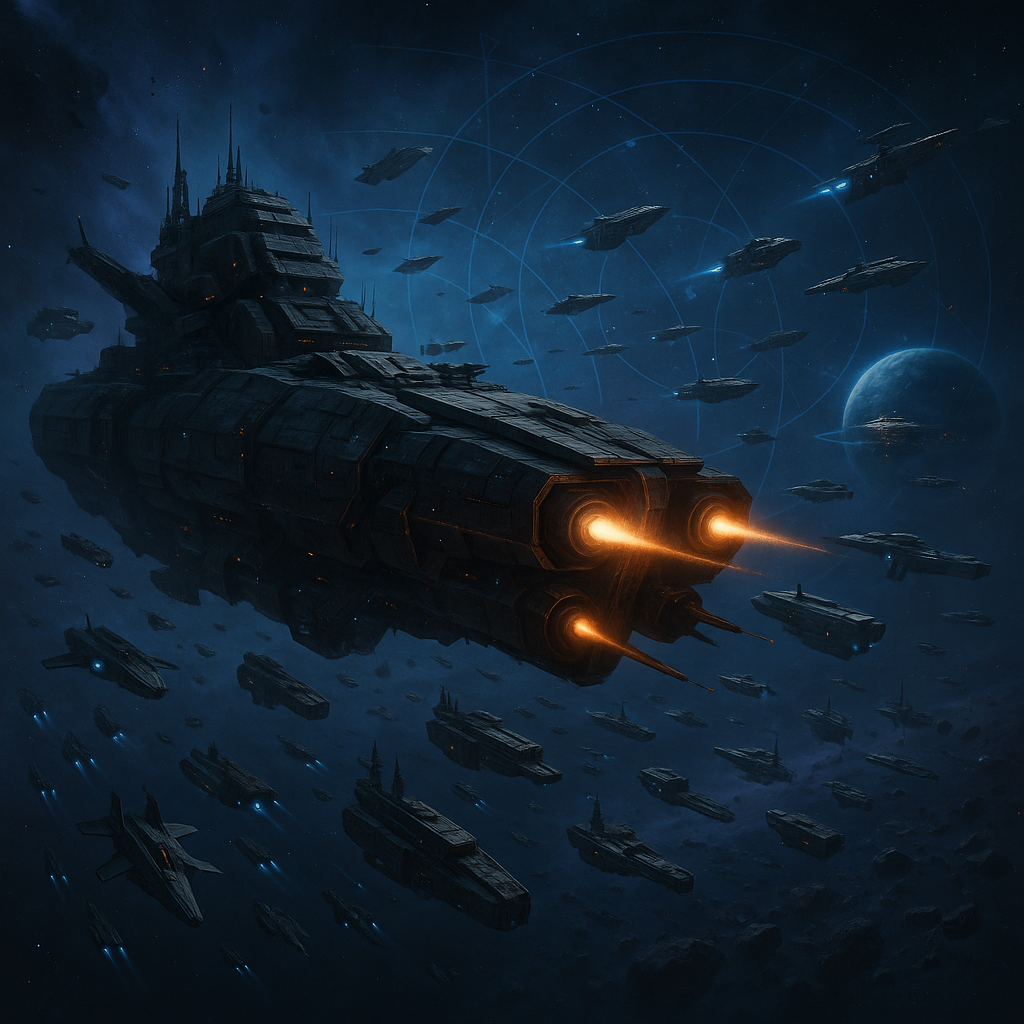
Beginner's Mistake: Building the "Strongest" Ships Instead of the Right Fleet in War for Galaxy
A typical beginner's trap in War for Galaxy seems very logical: a player opens the stats, sees the Colossus has a conditional combat power of 28,000, compares it to other ships, and decides to save only for the "strongest". In space games, a large ship seems like a direct ticket to dominance: huge armor, powerful shields, impressive weaponry, status. But in actual combat, such a showcase of strength can easily turn into an expensive mistake.
The conditional combat power in the game really helps roughly predict the outcome of a battle. The knowledge base provides an example: 1 Colossus according to this rating is roughly equal to 86 Destroyers. However, this does not mean the Colossus is universal. With a fivefold advantage in conditional combat power, the winner usually sustains minimal losses, but without such a margin details matter: fleet composition, weapon types, levels of defense, shields, armor, positions, and firing sectors.
It is important not to confuse ratings. The overall rating reflects invested resources, buildings, research, fleet, and defense. The combat rating is given by the Elo system for actual wins and losses. Building an expensive ship is not the same as learning to fight. The main idea of this article is simple: the right fleet in War for Galaxy is not the most expensive fleet, but a composition assembled for a specific space battle.
How the Combat System Punishes Uniform Armadas
War for Galaxy is closer to tactical browser strategy games and space combat games than simple big-number comparisons. Combat takes place on a 20×20 grid; each side occupies 4 rows from opposite edges, and all ships of the same type merge into one super-unit. If you build 300 Fighters, the system treats them as a large platoon of Fighters; if 10 Destroyers, one platoon of Destroyers. This is convenient for calculation, but dangerous for uniform armadas: a class weakness becomes a weakness of the whole fleet.
The battle lasts until one side is destroyed or 10 minutes elapse. If no one wins, a draw is recorded. Each round, all units simultaneously check available targets and shoot those within their weapon range. Damage first hits shields, then armor, with leftover damage spilling over to the next unit in the platoon. Therefore, mass helps but does not save from unsuitable weapons or poor positioning.
There are three defense levels: 1, 2, and 3. Infrared lasers deal 100% damage to level 1 defense, but only 16% to levels 2–3. Lepton weapons, conversely, deal 100% damage to levels 1–2, but only 52% to level 3. In other words, the same conditional power does not equal the same effectiveness against a specific target.
Firing sectors are equally important. Almost no ship weapon fires in all directions; rockets are an exception in the knowledge base. The Colossus is especially fearsome when facing its target directly in the main caliber sector. But if smaller ships flank it from side or rear, some of its weapons may not reach targets. The Colossus remains strong, but without support it cannot fully realize its power.
Ship Roles: Why the Fleet Should Be Mixed
The right fleet is assembled not by "more expensive means better", but by roles. Some ships are for numbers and speed, others for pressure on defense, a third for skill control, and others don’t enter firefights because they handle transport, reconnaissance, colonization, or debris recycling.
- Fighter: conditional combat power 9, speed 12,500, defense level 1, frontal small infrared lasers. Its skill "Rocket Salvo" adds damage to ships. Not "trash before a real fleet", but a mass light unit for specific tasks.
- Assaulter: power 24, defense level 1, annihilation engine. Skill "Torpedoes" does additional damage to defensive structures, so useful in different situations than Fighters.
- Corvette: power 73, defense level 2, speed 15,000, multiple turrets and photon cannon. "Suppressive Fire" skill grants rapid fire at the cost of maneuverability.
- Frigate: power 135, defense level 2, subspace engine, 65% chance to restore upon victory. "Barrier" skill adds +150% shields for 5 seconds, helping survive tough exchanges.
- Galaction: power 270, defense level 2. "Radio Suppression" disables enemy unit skills and reduces target attack by 50%, critical against fleets relying on abilities.
- Bomber: power 265, defense level 3, rocket salvo system with 0–360° firing sector. Skill "Hailstorm" is a massive rocket strike against defensive structures. A specialized tool against fortified planets.
- Destroyer: power 360, defense level 3, lepton weapon. "Lepton Strike" deals +300% damage to the most powerful lepton target, making Destroyers valuable against large targets.
- Colossus: power 28,000, armor 3,600,000, shield 500,000, defense level 3, subspace engine, hold 1,000,000, but base speed just 100. Huge cost: 5,000,000 Titanium, 4,000,000 Silicon, and 1,000,000 Antimatter. Strong but expensive, slow, and vulnerable without proper support.
Support ships are no less important. The Shuttle has a hold of 5,000, Transport 25,000, and without them, victorious looting may not pay off. Collectors are the only ships that recycle debris as part of the "Recycling" mission. Recon probes are needed for "Espionage": even if shot down, the owner still gets the report. The Pioneer is needed for colonization and, under new rules, for creating an Alliance — 1 Pioneer is required. The Marauder is not a combat ship: it does not participate in attack or defense, cannot be destroyed when attacking its home planet, and is used only for the "Looting" mission.
Five Beginner Mistakes in Fleet Building
1. Building an Armada of One Type
Monoculture is convenient for production but dangerous in combat. Each ship class has weaknesses. Light ships are useful against heavy ships in numbers and proper use; medium ships are better vs. light targets; heavy ships are strong against large targets and defenses. But no class covers everything at once.
2. Attacking Defenses "With Anything"
Defensive structures are stationary and fire 360°, so they don’t suffer from narrow firing sectors like ships do. Bombers are especially useful against defenses, and Galactions matter against skill-reliant fleets. Sending simply the "most expensive" means not planning the fight — just hoping.
3. Not Considering Restoration
Defenses restore after any fight according to their chance: e.g. Rocket Launcher — 25%, Lepton Cannon — 75%. Ships restore only if victorious, according to their chance: from 15% for Fighters up to 85% for Colossus. Victory bought at too high a loss may be an economic defeat.
4. Forgetting Fuel, Speed, and Holds
The fleet must get there, return, and carry loot. Ship fuel capacity always matches cargo holds, and antimatter spent on fuel isn’t counted in ratings. A slow ship slows the group, small holds reduce profit, and a distant raid may consume gains on fuel.
5. Not Preparing Collectors and Not Practicing
Debris after an attack doesn’t have a fixed lifespan: it exists until recycled or server reset. Only Collectors on the "Recycling" mission can take it. Pirates are a good training ground for beginners: they hardly give combat rating but leave debris like a regular fleet. Their composition depends on the average combat power of all inhabited planets nearby: near beginners appear lighter pirates; near experienced players, stronger ones.
How to Assemble the Right Fleet for the Task: Pre-Flight Checklist
As in many online strategy and real-time strategy games, the outcome is often decided before the fight. Before clicking "Send", ask not "Is the power enough?" but "Does the composition fit the task?"
- Name the mission goal. Is it attack, looting, defense, joint attack, transportation, redeployment, recycling, colonization, or Marauder looting? Each task requires its own composition.
- Check reconnaissance data. Understand if there’s a fleet, defenses, resources, and what defense levels you will face. Premium shop shields block attacks and espionage, but their owner can’t scan others while active.
- Separate the target type. Winning an attack on an enemy planet can destroy ships and defenses and take half the resources. You cannot completely destroy an enemy planet, so the raid goal must be specific: resources, fleet, debris, weakening defenses, or preparing an alliance operation.
- Calculate logistics. Is there enough speed, holds, and fuel? Are Transports or Shuttles needed? Are Collectors ready if debris is expected? If the fleet is too expensive to risk, is there a retreat plan?
- Assess alliance support. Defense mission is only available among Alliance members. The defended planet must have a Refueling Base; its level determines slots for allied fleets. Without it, Defense is impossible.
- Check joint attack conditions. It allows alliance members to combine fleets, but the organizer must be the slowest participant so others can join. Maximum participants depend on the organizer's Navigation: ⌊Navigation Level / 5⌋ + 1. In battle, same-type ships from all participants merge into a super-unit; tech levels are weighted averages by ship numbers.
- Use Teleport correctly. Teleport instantly redeploys your fleets between your own planets with Teleport: fixed time — 5 minutes, no fuel consumption, but uses 1 fleet slot. Cannot be used for attacks, espionage, enemy or allied planets. If the fleet is too large for your Teleport level, system won't send it; upgrading increases max capacity and shortens cooldown.
Conclusion: Build Not a Showcase of Power, But a Tool for Victory
A beginner in War for Galaxy often loses not because they have few "strongest" ships, but because the fleet does not match the task. A strong fleet is not the most expensive fleet. It is a properly assembled tool: for the scouted target, for the defenses, defense levels, speed, holds, fuel, risk of losses, and post-battle plan.
Test different compositions on pirates, read reports, see which ships really deal damage, which fail to keep up, where support is lacking, and when victory is not profitable. Do not ignore support ships: without Recon probes you fly blind; without Transports you lose profit; without Collectors you give debris to those better prepared.
When solo play becomes crowded, join an Alliance. An Alliance is a union of players forming a joint Alliance multi-account for capturing and controlling galactic territories. It opens joint defense, joint attacks, resource and ship transfer to the alliance account, wars, and system battles. Important: a normal player can’t transfer troops directly to another player, but can relocate ships into the Alliance's ownership on alliance planets.
Join War for Galaxy, assemble not the "flashiest" armada, but a fleet for your style: PvE, looting, defense, or alliance space battles. You can start at the official Russian-language page or immediately in the browser version of War for Galaxy. Note: there are no promo codes in War for Galaxy. Instead, a referral system grants up to 6,000,000 antimatter as staged rewards for inviting friends.