Why don't oceans spill into space
Space & Astronomy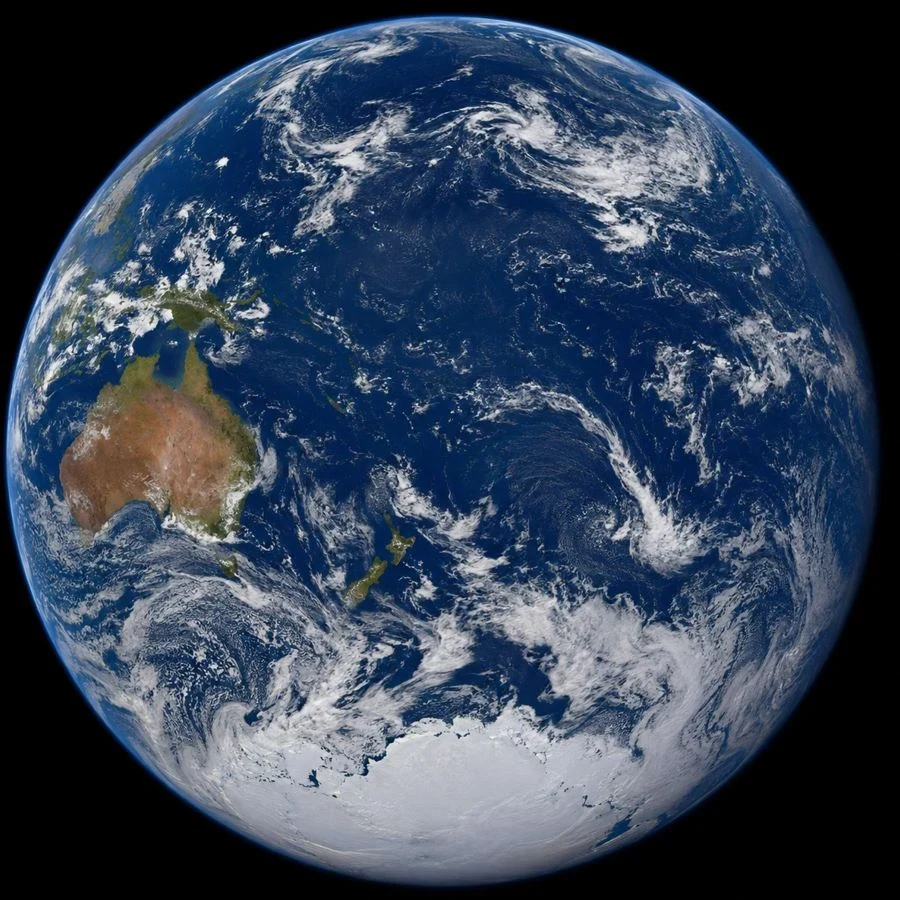
Oceans cover most of Earth's surface and contain an extraordinary amount of water. But if our planet is a giant sphere moving through space, why doesn't all that water spill off the bottom and disappear into the cosmic vacuum? The question sounds simple, yet the answer reveals some fascinating physics. There's no universal up or down in space, and oceans don't need invisible walls to stay where they belong. In this article, we'll explain how gravity holds water on planets, why Earth's rotation doesn't throw the oceans away, what would happen if gravity vanished, and how natural satellites influence enormous bodies of water.
How does gravity affect water on planets
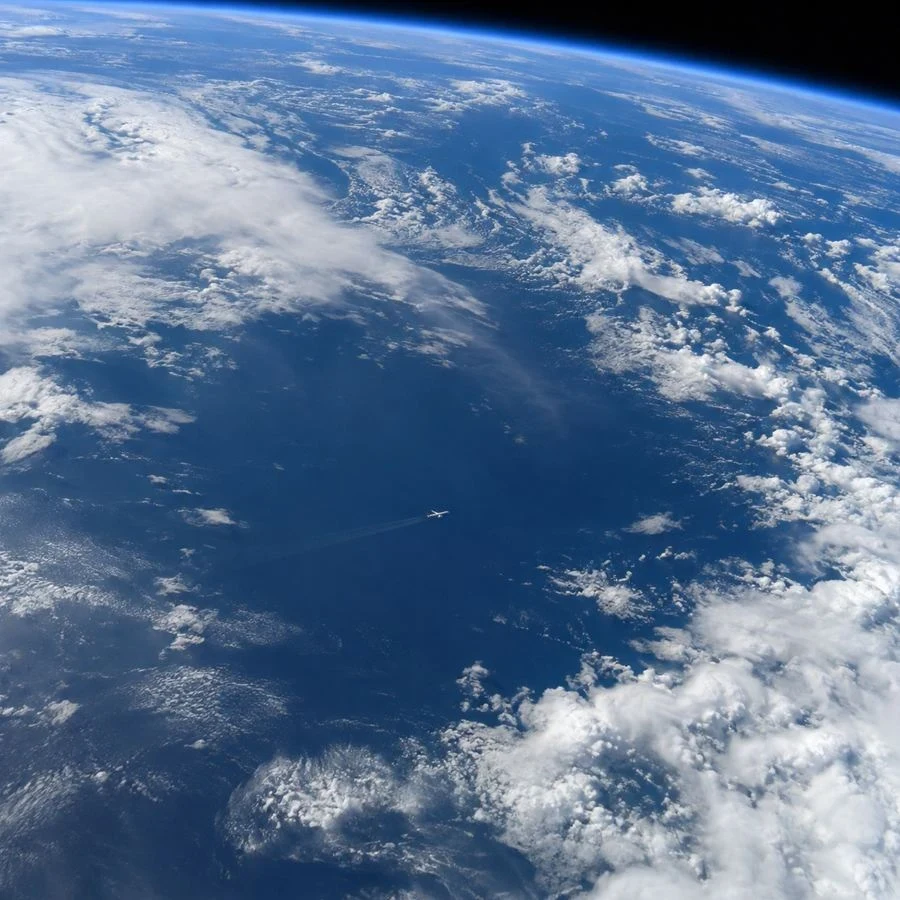
The main reason oceans remain on Earth is gravity. Our planet has enough mass to attract nearby matter, including the atmosphere, glaciers, rivers, and seawater. This attraction works across the entire surface, so water doesn't need a physical container to prevent it from escaping into space. Instead, it naturally collects in low-lying regions and forms oceans whose shape follows Earth's gravitational field. The same principle applies to other worlds capable of retaining substantial amounts of water.
It's easy to imagine that water on the opposite side of Earth should fall away because the planet is round. However, the concept of "down" depends on your location. For someone standing in Australia, down points approximately toward Earth's center, just as it does for someone standing in Europe. Their directions are different relative to distant stars, but gravity keeps both people and the surrounding ocean attached to the planet. There is no special underside of Earth where water suddenly loses its gravitational support.
Water can flow freely, so it continuously responds to differences in pressure and gravitational potential. When you pour it into a glass, it collects at the bottom. When rain falls on a mountain, the water flows downhill toward lower elevations. On a planetary scale, oceans behave according to the same physical laws, although their distribution is influenced by the shape of continents, the rotation of Earth, and differences in its gravitational field.
An important concept here is hydrostatic equilibrium. As water gets deeper, pressure increases because more liquid is pressing down from above. This pressure gradient balances the gravitational force acting on the water, allowing large bodies of liquid to remain stable. Without such a balance, ocean water would continue moving until the forces acting on it reached a new equilibrium.
Earth's ocean surface isn't a perfectly smooth mathematical sphere. Our planet is slightly wider at the equator than at the poles, and its internal mass isn't distributed uniformly. These differences create small variations in gravitational strength. Scientists describe the resulting idealized mean sea-level surface using a model called the geoid, which helps explain why ocean levels don't follow a perfect geometric shape.
Ultimately, oceans don't spill into space because Earth's gravity holds them far more strongly than ordinary fluid motion can carry them away. Water may evaporate, freeze, flow, or move with currents, but these processes don't automatically give it enough energy to escape the planet.
What about centrifugal force
Earth rotates around its axis approximately once every 24 hours. If you've ever watched water fly outward from a rapidly spinning object, you might wonder why the same thing doesn't happen to the oceans. The answer involves centrifugal force, which appears when motion is described from a rotating reference frame.
In this frame, centrifugal force acts away from the axis of rotation. Its strength depends on rotational speed and distance from that axis, making its influence greatest near the equator and zero at the geographic poles. However, Earth's rotation is nowhere near fast enough to overcome its gravitational attraction. At the equator, centrifugal acceleration is approximately 0.034 meters per second squared, compared with gravitational acceleration of roughly 9.8 meters per second squared.
This relatively small difference explains why the oceans remain securely attached to Earth. Rotation does influence the planet's shape, contributing to its slight equatorial bulge. The equatorial radius is approximately 21 kilometers greater than the polar radius, and the ocean surface adjusts to the combined effects of gravity and rotation. Effective gravitational acceleration is also slightly weaker near the equator than near the poles.
If Earth rotated dramatically faster, the situation could become different. Under sufficiently extreme conditions, the outward effect associated with rotation could significantly change the planet's shape and make material near the equator less securely bound. Fortunately, Earth's present rotation is stable enough that nothing resembling this scenario threatens our oceans. Centrifugal force influences their equilibrium, but it doesn't cause seawater to fly into space.
What would happen if gravity disappeared
Imagine a fictional scenario where Earth's gravitational field suddenly vanished. This isn't something that modern physics predicts could actually happen, but it provides an interesting thought experiment. Without the attraction that normally holds water against the surface, the oceans would no longer remain in their familiar positions. However, they wouldn't simply pour downward like water falling off a table, because there would be no universal downward direction.
Water has inertia, meaning it tends to continue moving according to its existing velocity unless other forces change that motion. Since Earth rotates, different regions of its surface already have different velocities relative to the planet's axis. Without Earth's gravity, water would begin following new trajectories rather than remaining in its current ocean basins. The resulting movement would depend on rotation, pressure differences, interactions between water molecules, and the remaining gravitational influence of other celestial bodies.
The oceans wouldn't instantly transform into billions of perfectly spherical droplets, either. Surface tension tends to pull small amounts of free-floating water into rounded shapes, something frequently demonstrated in microgravity experiments aboard spacecraft. But Earth's oceans contain an enormous amount of liquid, and surface tension alone couldn't keep such a huge mass together as one stable sphere. Large volumes would behave differently from the small floating droplets familiar from space station videos.
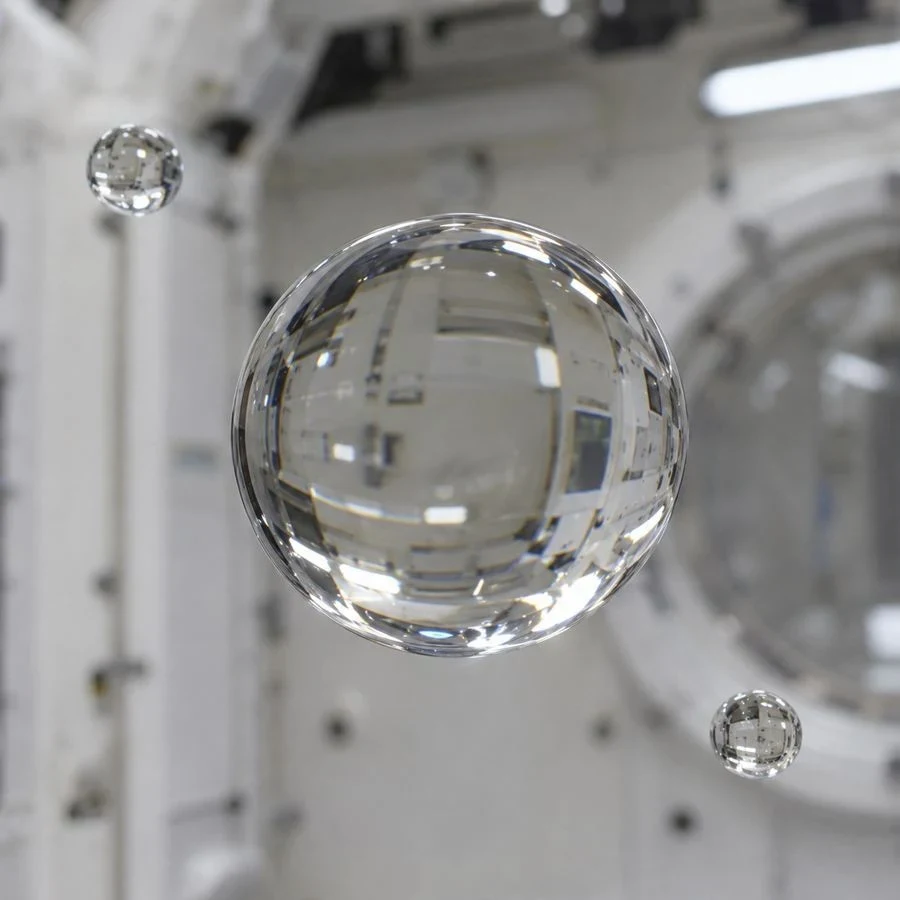
The atmosphere would also undergo dramatic changes. Without Earth's gravitational attraction, air would no longer maintain its familiar distribution around the planet, and atmospheric pressure at the surface would begin changing rapidly. This would seriously affect the physical state of water. Under sufficiently low pressure, exposed liquid water can boil or evaporate rapidly, losing energy as it does so. Some remaining water could cool enough to freeze, while ice exposed to vacuum could gradually sublimate into vapor.
Such an event would make Earth's surface uninhabitable for ordinary life. Oceans and atmospheric gases would no longer remain distributed as they are today, while the disappearance of stable air pressure would create additional dangers. The Moon's motion and the trajectories of artificial satellites would also be affected because their gravitational relationship with Earth would change.
It's important not to confuse this imaginary event with the weightlessness experienced aboard the International Space Station. Astronauts float because they and the station are falling together around Earth, not because gravity has vanished. In reality, there is no known mechanism that could suddenly switch off Earth's gravity and cause the oceans to escape.
How do moons affect water on planets
Although Earth's gravity keeps oceans in place, other celestial bodies can influence how water moves across the surface. The Moon is the most familiar example because its gravitational attraction is the primary driver of Earth's ocean tides. These tides cause sea levels to rise and fall along coastlines, sometimes producing dramatic changes in the amount of exposed beach or shoreline.
The Moon doesn't attract every part of Earth with exactly the same strength. The side closest to the Moon experiences a slightly stronger gravitational pull than the planet's center, while the far side experiences a weaker pull. This difference creates tidal forces that redistribute ocean water. In a simplified model, two tidal bulges form on opposite sides of Earth, and the planet's rotation causes different coastal regions to experience changing water levels.
The Sun also contributes to tides. Although it's vastly more massive than the Moon, its much greater distance makes its tidal influence on Earth weaker. When the Sun, Earth, and Moon are approximately aligned, their tidal effects reinforce one another, producing larger tidal ranges known as spring tides. When the Sun and Moon are positioned roughly at right angles relative to Earth, their effects partially counteract each other, producing smaller neap tides.
Real ocean tides are more complicated than this simplified picture suggests. Continents interrupt the movement of water, while coastal shapes, seafloor depth, and ocean-basin geometry affect how tidal waves propagate. Consequently, some coastlines experience relatively small changes in water level, while others can see tidal ranges of several meters. The timing of high tide also doesn't always correspond directly to the Moon's position in the sky.
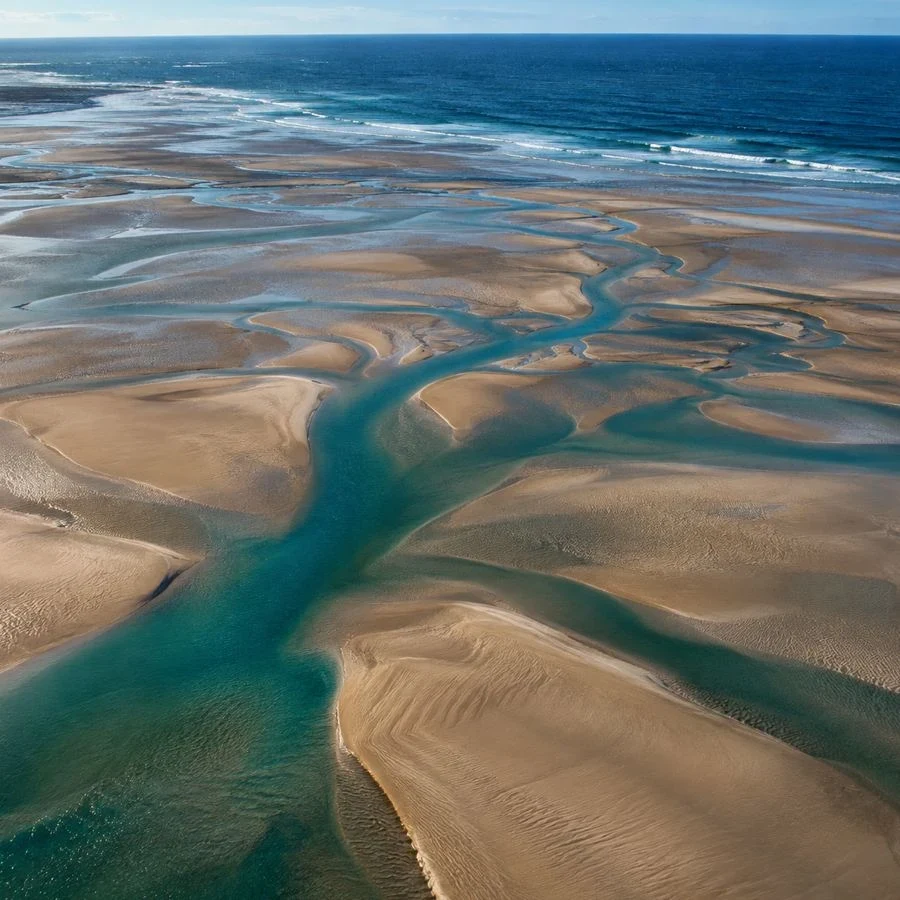
Tidal interactions have consequences beyond daily changes in sea level. The movement of ocean water dissipates energy and gradually influences Earth's rotation and the Moon's orbit. Over long periods, these interactions contribute to the Moon moving away from Earth at an average rate of approximately 3.8 centimeters per year.
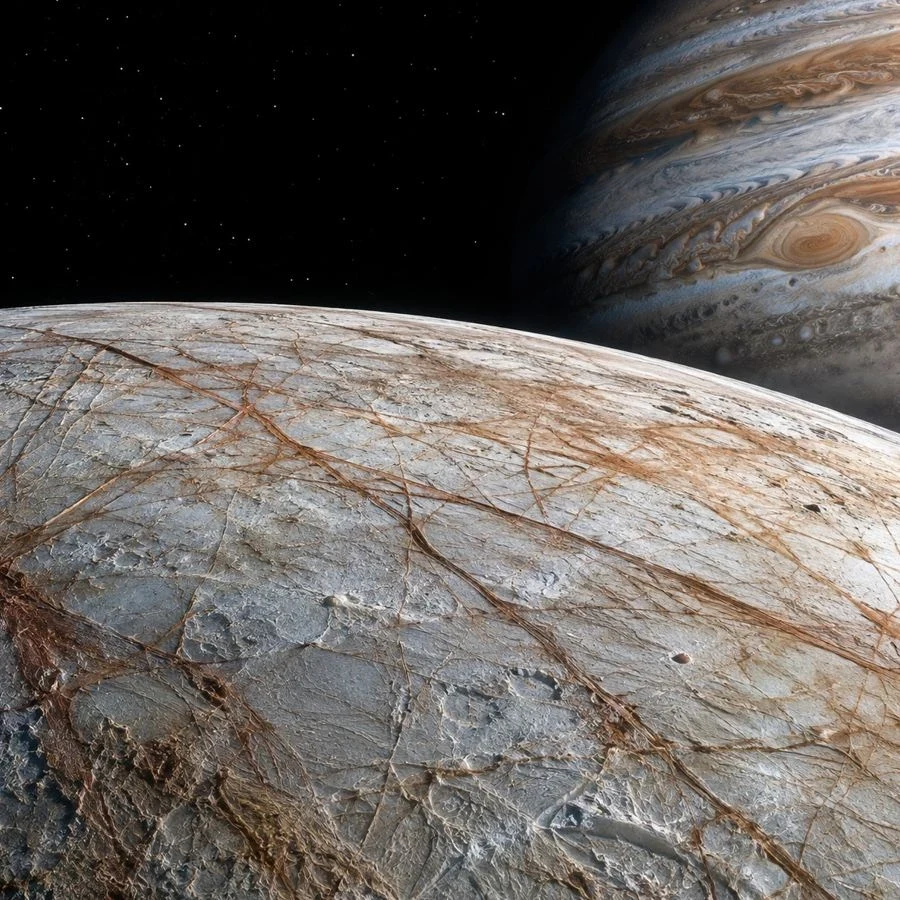
Even more fascinating effects occur elsewhere in the Solar System. Jupiter's moon Europa is believed to contain a global ocean beneath its icy surface. Jupiter's powerful gravity repeatedly deforms the moon as it travels along its slightly elliptical orbit, generating tidal heating that helps maintain conditions suitable for liquid water beneath the ice.
Saturn's moon Enceladus provides another remarkable example. NASA's Cassini mission observed plumes of water vapor and icy particles emerging from fractures near its south pole. Evidence indicates that these emissions are connected to a subsurface ocean, with tidal interactions contributing to the moon's internal energy. Although some water escapes through these plumes, the much larger ocean remains beneath the ice.
These discoveries reveal that gravity does more than simply hold water on a planet. Interactions between moons, planets, and their orbital motion can reshape oceans, create tides, and generate internal heat on icy worlds. Yet none of these effects means that Earth's oceans are at risk of spilling into space. Their stability ultimately depends on the gravitational attraction of the planet that holds them.
Explore distant worlds with WarForGalaxy
The physics of planetary oceans demonstrates how many forces shape the environments of distant worlds. If you enjoy exploring planets and imagining what it takes to build a civilization beyond Earth, WarForGalaxy offers an opportunity to create your own interstellar empire.
WarForGalaxy is a free cross-platform multiplayer 4X space strategy game focused on exploration, planetary development, resource management, and galactic warfare. Start with a small colony, build essential infrastructure, research advanced technologies, and assemble military fleets as your civilization expands into new territories.
The galaxy is home to players from around the world, making diplomacy and cooperation important parts of the experience. You can join alliances, coordinate military campaigns, defend valuable planets, and compete for strategic influence. WarForGalaxy also features Hermes, an AI assistant designed to help with strategic analysis and selected routine empire-management tasks.
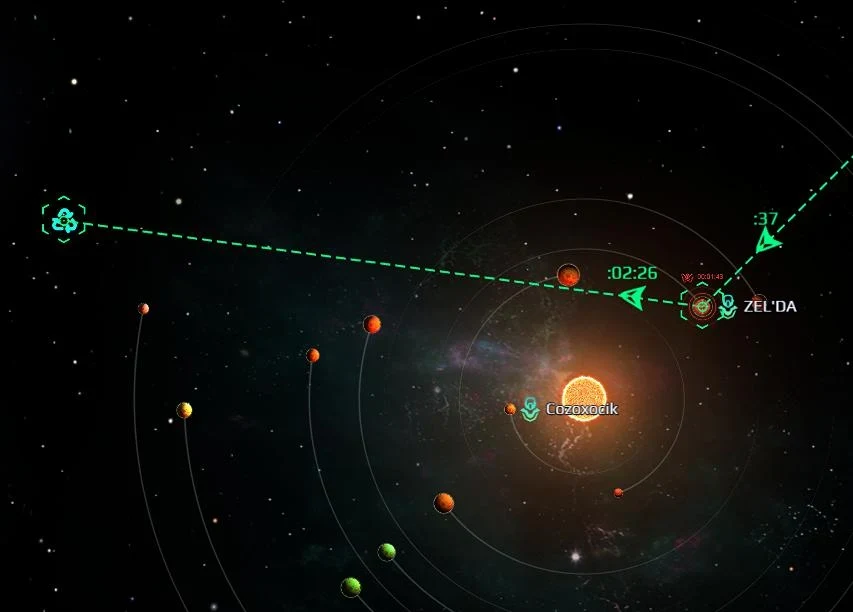
You can play on computers and smartphones, while the PC version runs directly in a web browser without requiring a separate game client. Whether you prefer developing a powerful economy or leading fleets into large-scale battles, your decisions will shape the future of your civilization.
Ready to begin your own journey among the stars? Play WarForGalaxy for free, establish your first colony, discover new planets, and build an empire capable of dominating the galaxy.