Why don't planets fall in space
Space & Astronomy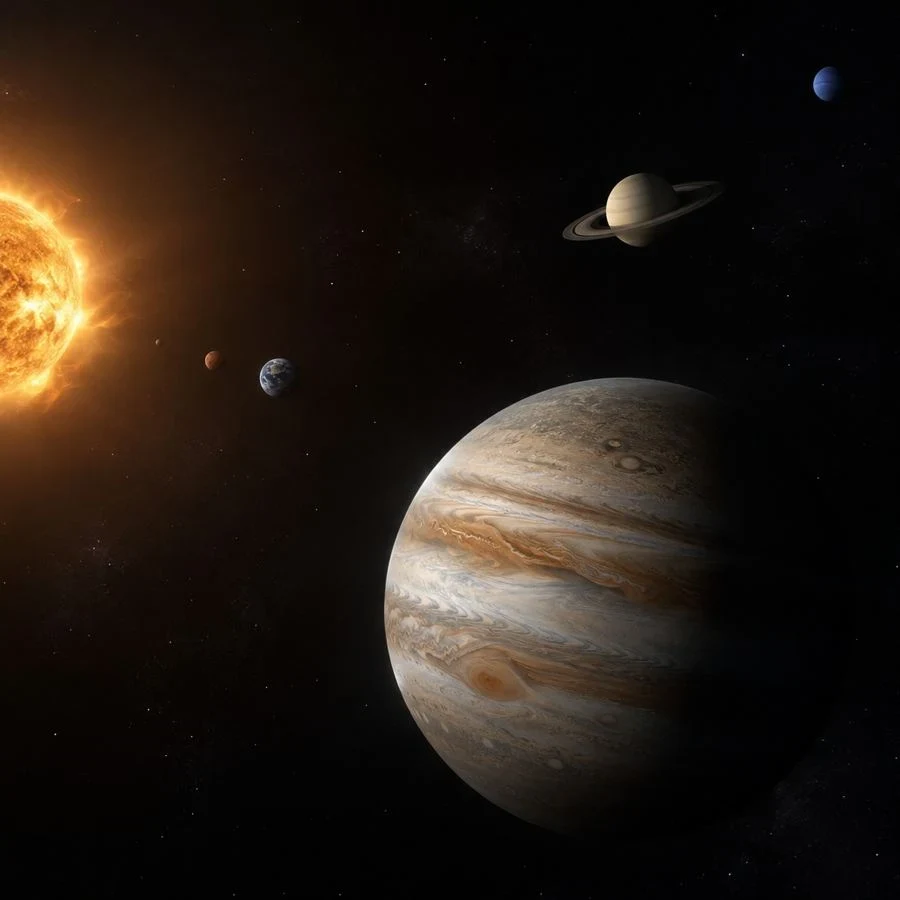
When you look at the Solar System, planets seem to float effortlessly through an enormous empty space. There's nothing supporting them, no invisible platform, and no physical barrier preventing them from drifting away. So why don't planets fall in space, crash into the Sun, or fly off into the galaxy? The answer involves gravity, motion, and the remarkable physics of planetary orbits. In this article, we'll explain how gravity keeps planets moving around stars, why they don't fall directly into the Sun, and what could cause an entire world to escape into interstellar space.
How do gravity and planetary orbits work
Gravity is the fundamental interaction that attracts objects with mass toward one another. It's responsible for keeping us on Earth's surface, maintaining the Moon's orbit, and controlling the movement of planets around the Sun. Our star contains almost all the mass in the Solar System, so its gravitational influence dominates the motion of the surrounding planets. However, attraction alone doesn't explain why these celestial bodies travel along stable paths instead of falling straight toward the Sun.
The missing piece is inertia, the tendency of an object to maintain its velocity unless a force changes its motion. Every planet already has a considerable velocity relative to the Sun. Without solar gravity, a planet would continue moving approximately in a straight line rather than following its familiar curved path. The Sun's gravitational attraction continuously changes the direction of that movement, producing an orbit. In other words, planets aren't hanging motionless in space. They're constantly traveling while gravity bends their trajectories.
An orbit is the path followed by a celestial object under the influence of gravity. In a simplified system containing two gravitationally interacting bodies, a bound orbit takes the form of an ellipse, with a circle representing a special case. Most planetary orbits in our Solar System are close to circular, although their distances from the Sun change slightly throughout each revolution. These variations influence orbital speed, which is why planets don't necessarily move at exactly the same velocity throughout their journeys.
In the seventeenth century, astronomer Johannes Kepler developed three laws describing planetary motion. His first law established that planets follow elliptical orbits with the Sun at one focus. The second explains why planets travel faster near the Sun and slower farther away, while the third connects the size of an orbit with the time required to complete it. These relationships explain why Mercury finishes an orbit in approximately 88 Earth days, while distant Neptune takes about 165 Earth years.
Isaac Newton later explained the physical mechanism behind these observations through his laws of motion and universal gravitation. His work demonstrated that the same principles governing falling objects on Earth also apply to planets and moons. Modern astronomy uses these foundations, along with more advanced physics, to calculate spacecraft trajectories, predict planetary positions, and understand distant star systems.
Real planetary systems are more complicated than the ideal two-body model because celestial objects also attract one another. Jupiter, for example, can alter the trajectories of nearby asteroids and influence other planets through gravitational interactions. Astronomers call these changes orbital perturbations. Computer simulations account for them when calculating how planetary systems evolve over millions or billions of years.
Importantly, orbits aren't physical tracks drawn through space. The familiar circles and ellipses shown in astronomy diagrams or space strategy games are visual representations. A planet follows its trajectory because of its velocity and the gravitational forces acting upon it, not because an invisible structure keeps it in place.
Why don't planets fall into the Sun
The Sun constantly pulls the planets toward itself, but gravitational attraction doesn't automatically produce a collision. Each planet also possesses sideways motion relative to the star. That combination creates a curved trajectory, allowing the planet to continue moving around the Sun instead of traveling directly into its surface.
A useful way to understand this is to imagine throwing a ball horizontally from an enormous height. Gravity pulls the ball downward, while its initial forward velocity carries it across the landscape. If the ball moved fast enough and there were no atmospheric drag, Earth's curved surface could continuously fall away beneath it. Instead of hitting the ground, the ball would enter orbit. Planets follow the same basic principle, except their motion takes place around a star rather than Earth.
Our planet provides a familiar example. Earth travels around the Sun at an average speed of approximately 29.8 kilometers per second. Solar gravity continuously accelerates it inward, but that enormous sideways velocity prevents a direct collision. In simple terms, Earth is always falling toward the Sun while continually missing it. The same mechanism keeps the other planets moving along their individual orbits.
This doesn't mean gravity and inertia are two opposing forces that perfectly cancel each other out. In a nearly circular orbit, gravity provides the inward acceleration required to keep changing the direction of motion. If there were no net inward acceleration, the planet would continue in a straight line. The curved orbital path exists precisely because gravitational attraction is still acting.
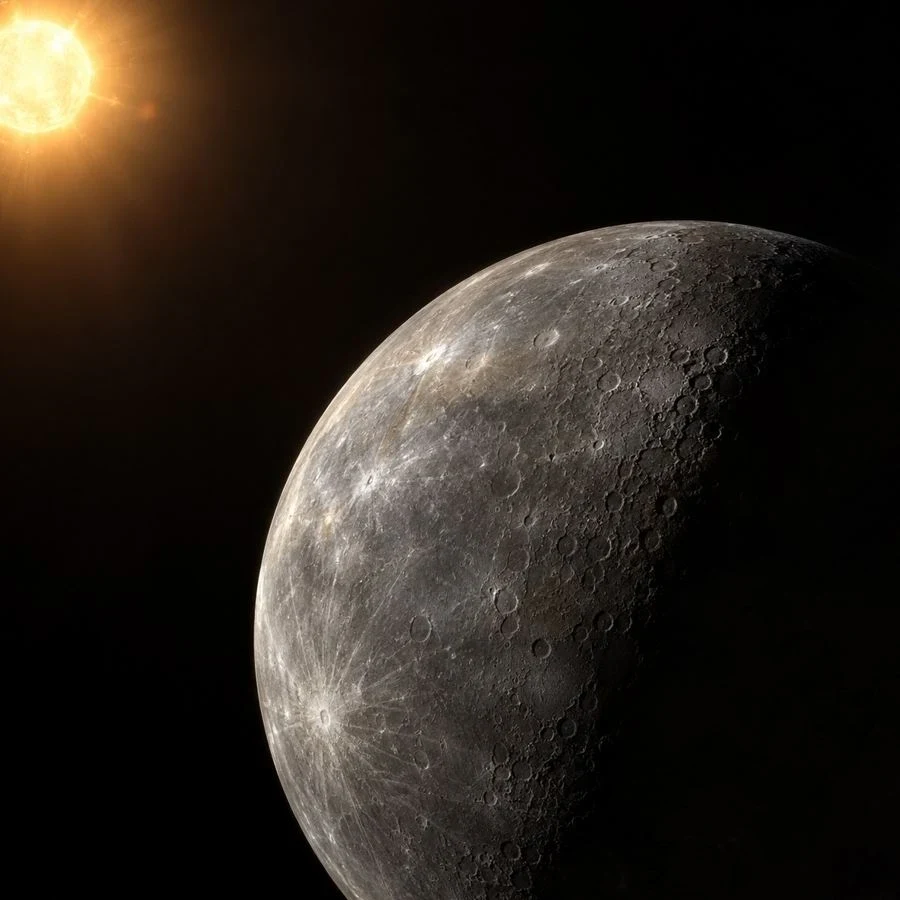
What would happen if a planet suddenly lost most of its sideways velocity? Its orbit could become dramatically more elongated, potentially bringing it close enough to collide with the star. Conversely, if a planet gained enough additional orbital energy, it could follow an unbound trajectory and escape the system entirely. The outcome depends on the object's speed, direction, distance from the star, and gravitational interactions with other bodies.
Another common question is why planets don't gradually slow down and spiral into the Sun. Unlike vehicles traveling through air, planets move through an environment with extremely little resistance. There isn't enough ordinary drag to rapidly remove their orbital energy. In an ideal gravitational two-body system, total mechanical energy remains constant, allowing the orbit to continue indefinitely.
That doesn't mean every orbit is permanently guaranteed to remain unchanged. Gravitational interactions, tidal forces, and stellar evolution can alter trajectories over extremely long periods. Some exoplanets orbit dangerously close to their parent stars and may experience significant tidal effects. However, the eight planets of our Solar System aren't expected to suddenly fall into the Sun under their present orbital conditions.
Can planets escape into space
Yes. Although most planets remain gravitationally bound to their stars, some can escape and travel through interstellar space. Astronomers call these objects rogue planets or free-floating planets. Unlike Earth or Mars, they aren't orbiting a parent star, making them some of the most mysterious worlds in the galaxy.
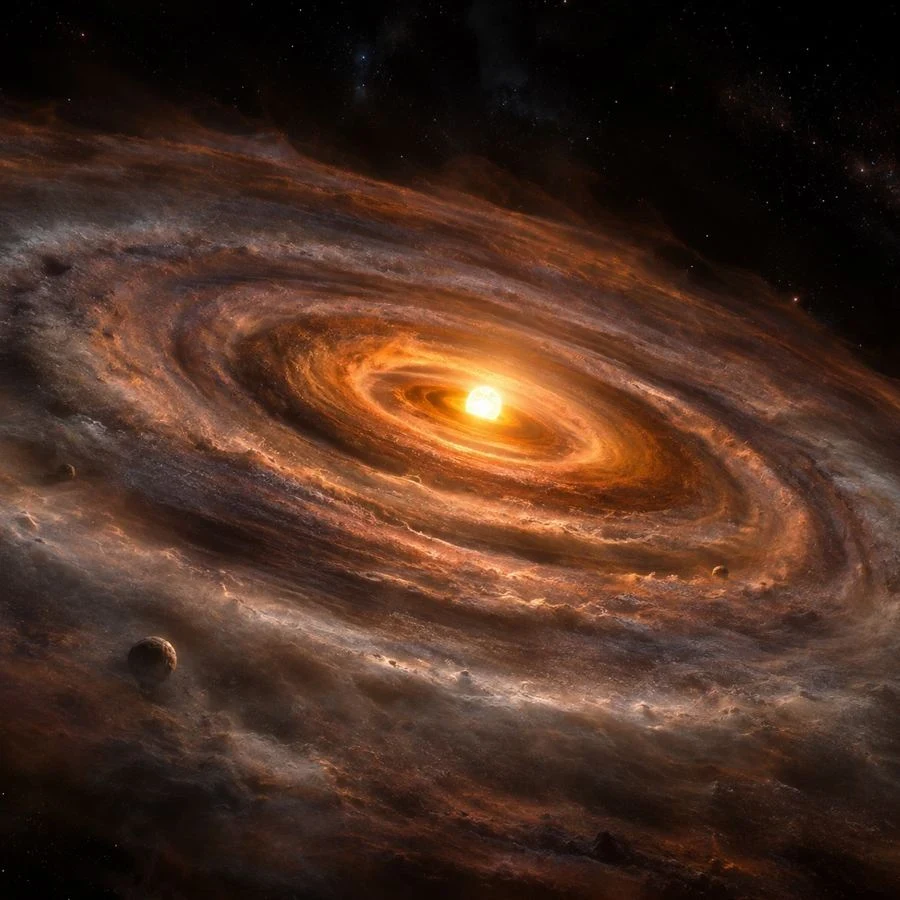
One possible explanation involves violent gravitational encounters during the early development of planetary systems. Young systems can contain several massive planets interacting with one another while their orbits are still evolving. During a close encounter, one planet may transfer orbital energy to another, causing their trajectories to change dramatically. If a planet gains enough energy, it can escape its original star's gravitational binding and begin traveling independently through the galaxy.
This process is known as gravitational scattering. A massive gas giant can substantially alter the motion of a smaller neighboring world, potentially sending it toward the star or ejecting it from the system. Encounters with passing stars can also disturb planetary orbits, particularly in crowded stellar nurseries where young stars form relatively close together.
A planet that escapes its home system doesn't become immune to gravity. It still experiences gravitational attraction from stars, gas clouds, and other matter in the Milky Way. The difference is that it no longer follows a bound orbit around its original star. Its journey may continue for millions or billions of years through regions without a nearby source of sunlight.
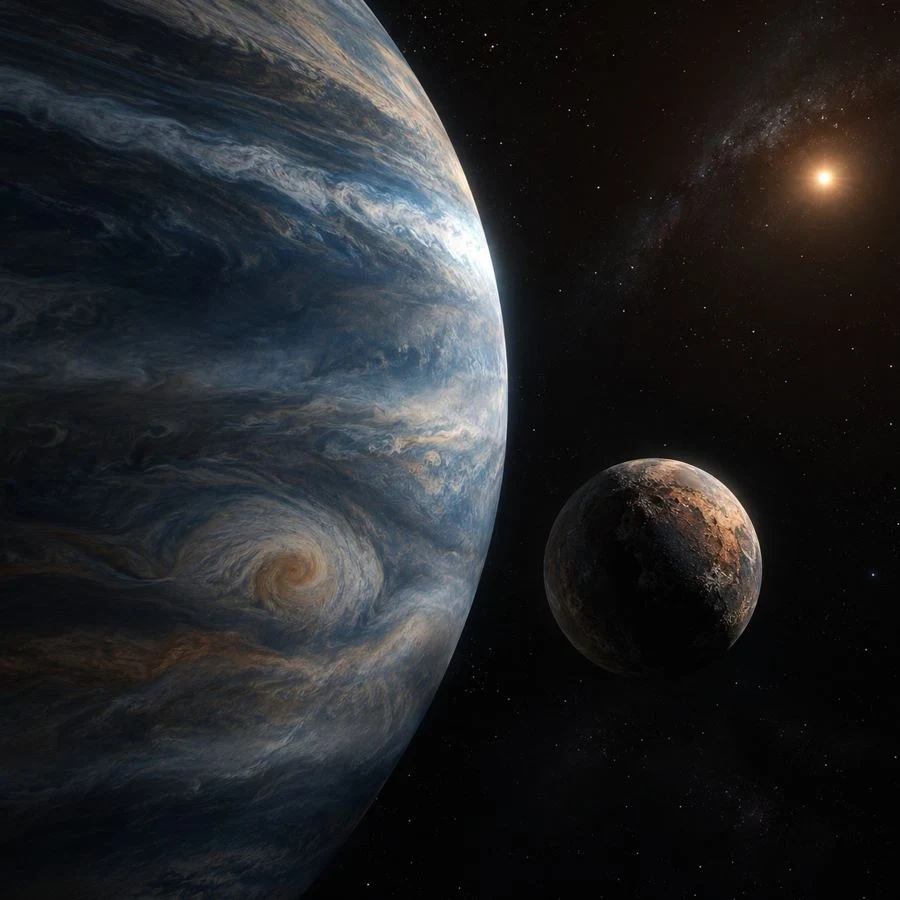
Detecting such planets is difficult because they don't reflect light from a parent star. Some young free-floating objects remain warm enough to emit infrared radiation left over from their formation, allowing astronomers to observe them using sensitive instruments. Older, cooler planets are much harder to find.
Another important detection method is gravitational microlensing. When a planetary-mass object passes almost directly in front of a distant background star, its gravity can temporarily magnify the star's light. Astronomers analyze these brief changes in brightness to investigate objects that might otherwise remain invisible. This technique has helped identify candidates for free-floating planets and offers opportunities to study their abundance.
However, not every isolated planetary-mass object necessarily escaped from an established planetary system. Some may have formed independently through the collapse of gas clouds, more like very low-mass stars. Distinguishing between these formation scenarios remains an important challenge for astronomers.
Could Earth eventually become a rogue planet? In principle, an extraordinarily strong gravitational encounter could change its orbit enough to eject it from the Solar System. However, such an event is extremely unlikely under present conditions. Our planetary system has remained broadly stable for billions of years, and there is no evidence of an imminent event capable of sending Earth into interstellar space.
The distant future will bring other changes. As the Sun evolves and eventually loses substantial mass during its later stages, the gravitational conditions affecting surviving planets will change. Their orbits may expand, while some inner worlds could face destruction as the Sun becomes a red giant. These developments occur on astronomical timescales rather than representing any immediate threat.
Ultimately, planets don't stay near stars because space prevents them from falling or escaping. They remain in orbit because their motion and gravitational interactions produce bound trajectories. Under different conditions, those same physical laws can send a planet plunging toward its star or launch it into the darkness between stellar systems.
Build your own galactic empire in WarForGalaxy
Planetary systems are shaped by gravity, movement, and countless interactions. If you enjoy exploring distant worlds and making strategic decisions that influence entire civilizations, WarForGalaxy offers a chance to create your own interstellar empire.
WarForGalaxy is a free cross-platform multiplayer 4X space strategy game where you can explore planets, establish colonies, manage resources, research technologies, and construct powerful military fleets. Starting with a small settlement, you'll develop your economy and gradually expand your influence across the galaxy.
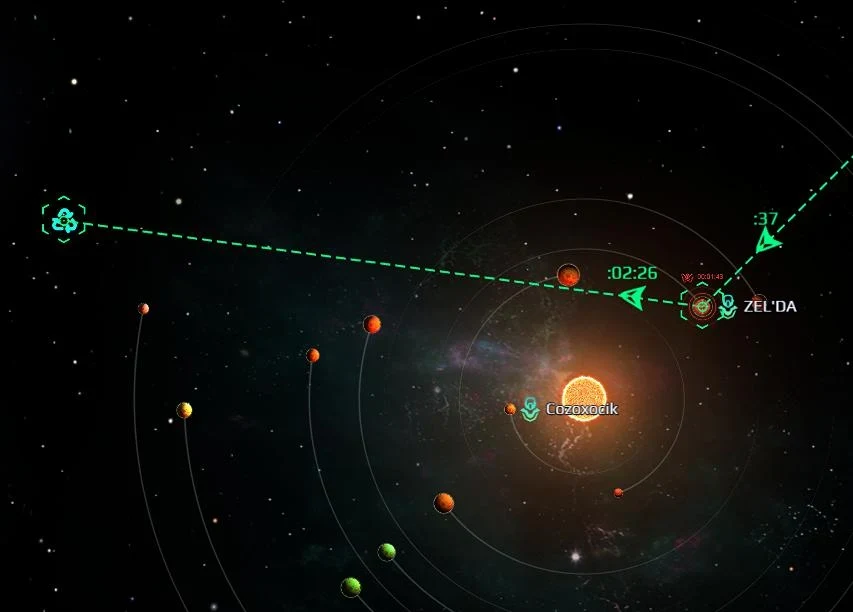
The multiplayer universe connects commanders from around the world, creating opportunities to form alliances, coordinate attacks, defend valuable territories, and participate in large-scale space wars. Whether you're focusing on economic development or preparing a major offensive, strategic planning plays a crucial role in your progress.
WarForGalaxy also features Hermes, an AI assistant designed to help analyze strategic situations and manage selected routine tasks. You can play on computers and smartphones, with browser-based access on PC that doesn't require installing a separate game client.
Ready to take command? Play WarForGalaxy for free, establish your first colony, build a powerful fleet, and begin your journey toward galactic domination.