
5 Mistakes in Fleet Building That Cause a Strong Army to Lose
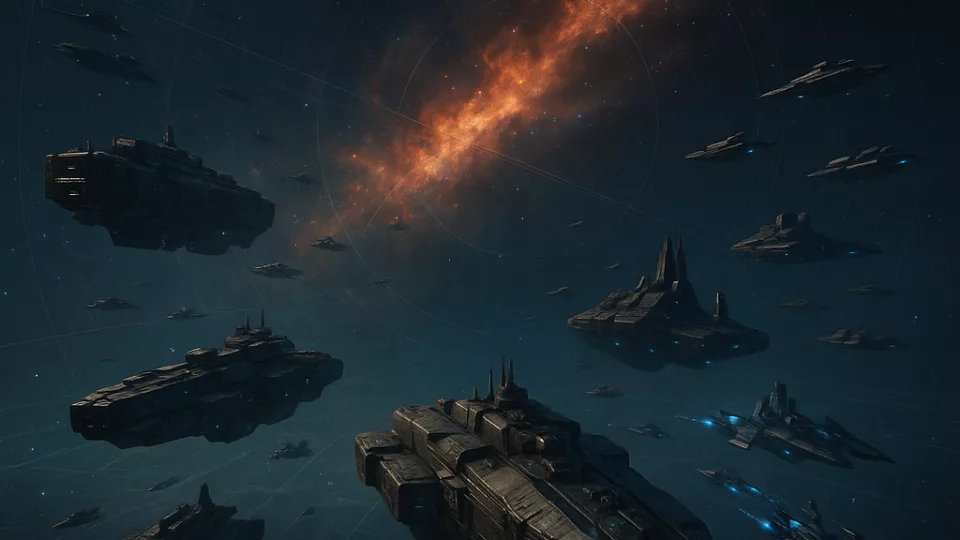
The most frustrating situation in War for Galaxy is familiar to many players: you invest in your fleet, see a considerable army power, confidently send your ships into battle — and still suffer defeat. At first glance, it seems the opponent was simply stronger, so you need more resources, more ships, and even higher overall power. But in space battles, the problem often runs deeper: it’s not the number that loses, but the structure.
The main mistake in thinking is to perceive the fleet as a single power indicator. If you look only at total power, it’s easy to miss what’s most important: what types of ships make up the fleet, what roles they fill, where the fleet’s weak spots are, and how the enemy can punish it. In War for Galaxy, victory depends not so much on an abstract number but on how consciously the army is assembled.
The fleet is not just a mass of ships. It’s a set of decisions. Some elements should create pressure, others cover vulnerabilities, and a third group serves as a response to potential enemy actions. If all power is combined in a predictable and easy-to-counter configuration, even an expensive and impressive army can lose to a more skillfully composed one.
In this article, we will explore five mistakes in fleet building that cause a strong army to lose. Without unconfirmed units, hidden numbers, damage tables, or promises of a universal winning build. The goal is different: to show principles that help think strategically and build fleets not out of habit but tailored to the task.
Basic principle of War for Galaxy: every ship type has a counter
Before moving on to the mistakes, it’s important to establish a key principle: in War for Galaxy, every ship type has a counter. This idea breaks the simple logic of “I have more power, so I must win.” A fleet composition doesn’t work in a vacuum but in a specific encounter where some types are effective against others, and a wrong imbalance can turn a strong army into an easy target.
Another important conclusion follows: a weak ship can kill a strong one, and a cheap ship can defeat an expensive one — but only with the right composition. This doesn’t mean price, development, and overall power aren’t important. They are, but they aren’t an automatic guarantee of victory. If a ship fits its role well and forms part of a well-thought counter composition, its value rises sharply. Conversely, an expensive unit placed in a bad situation may fail to realize its potential.
It’s easiest to think about this like chess or card games. A piece is strong not by itself but in a specific position. A card wins not because it looks rare or expensive, but because it was played at the right time and counters a real threat. The same applies in War for Galaxy: a ship’s value is defined not only by its status but by its place in the overall build.
That’s why counter compositions matter more than blindly amassing an army. You can keep increasing total power, but if your fleet is vulnerable to one obvious counter, your opponent has a simple plan. Alternatively, you can build a more flexible composition where different types cover each other’s weak spots and provide options against different threats. This quality is especially appreciated by players who enjoy online strategies, browser strategy games, online strategy games, real-time strategy games, and space combat games: victory here is born not just from leveling up but from decisions made before battle.
So the first right question before heading out isn’t “What is my strongest unit?” but rather “What should my fleet counter, and what can counter me?” If you want to test this approach, open the web version of War for Galaxy and before your next battle, look at your composition not as a number but as a system of roles.
Mistake #1: Building a uniform fleet
The first trap seems very logical. A player finds a ship type that performs well, quickly grows total power, or simply seems convenient, and begins to rely almost entirely on it. This approach gives a feeling of control: the composition is clear, familiar, easy to repeat. But the greater the imbalance toward one type, the easier it is for the opponent to find a counter.
A uniform fleet is comfortable until it encounters the right counter. If all power is concentrated in one group or one combat style, the opponent doesn’t need to dissect a complex structure. They just need to identify the main imbalance and hit it. As a result, an impressive army can crumble not because it’s weak but because it’s too predictable.
This is a typical mistake of a player who evaluates the fleet as a mass rather than a set of tasks. Proper fleet assembly requires variety in roles. Some elements create pressure, others prevent failures against inconvenient counters, and some make the composition less readable. When everything is reduced to one type, the fleet looks strong on paper but becomes fragile in real battle.
You can check yourself easily. If before a fight you could describe your composition with a phrase like “My fleet is mostly built around one type,” it’s a sign to stop. It’s not necessary to completely change strategy, but you should ask: what happens if the opponent fields a suitable counter? Is there a backup plan? Are the weak spots covered, or is the whole army relying on the enemy not guessing the answer?
Mistake #2: Believing expensive ships guarantee victory
The second mistake is the belief that an expensive ship must win over a cheap one simply because it costs more. This is a common psychological trap: if a unit requires more investment and increases the sense of power, you want to believe it will decide the fight alone. But in War for Galaxy, price does not cancel counters, and a ship’s status does not protect it from poor composition.
A cheap ship can destroy an expensive one if it is part of the right composition and fulfills a necessary role. A weak unit can prove more useful than a strong one if it hits the enemy’s vulnerability. This isn’t magic or randomness but follows the basic principle of counterpicking: every ship type has an answer, and a unit’s value is revealed through interaction with the rest of the fleet.
Therefore, an expensive fleet is not always a smart fleet. Resources, development, and power are important but do not replace balance. A strong army loses when its power is gathered in a vulnerable structure: too linear, too dependent on one type, too confident that price alone provides protection.
Before an important fight, it’s more useful to ask not “Which ships are the most expensive?” but “Which roles are covered?”, “Is my fleet too easy to read?”, “Does the composition have answers to possible threats?” This approach helps avoid throwing resources into endlessly strengthening one idea that’s already obvious to the opponent.
Mistake #3: Building a fleet in a vacuum and ignoring counters
The third mistake begins when a player looks only at their own side. They strengthen familiar ship types, rejoice in growing total power, replicate past successful schemes — and hardly ask the main question: what can counter this? But since every ship type has a counter, a fleet cannot be judged only internally. It must be viewed relative to the potential opponent and the specific battle.
The same composition might be successful in one circumstance and weak in another. Against one fleet, it fulfills its roles; against another, it encounters an inconvenient matchup. This doesn’t mean the build is bad forever, but that the situation changed and so did the value of certain elements.
If the player ignores counters, the opponent will think about them instead. Especially risky are builds that look strong only from one angle: lots of pressure but little sustainability; many expensive units but little flexibility; good screen power but obvious vulnerability to a certain counter. In such cases, defeat often comes not from lack of power but because the fleet became an easy target.
A helpful tactical filter before battle looks like this: which roles are already covered? Where does the fleet have weaknesses? What happens if the enemy focuses on counters? Are there elements to replace or balance out? These questions require no secret formulas or exact numbers; they require the habit of seeing the composition as a system, not just as a sum of ships.
Mistake #4: Using the same pattern against all opponents
The fourth mistake resembles the third but manifests differently: a player finds a successful build and starts using it everywhere. At first, this works. Victories reinforce habit, the composition seems reliable, and there’s no desire to change anything. But in online strategy games, the value of a build always depends on context. A good build against one opponent can be weak against another.
There’s no universal composition that solves all tasks equally well. Victory depends on the right build for the situation, not mechanical copying of yesterday’s pattern. If the enemy shifts their focus but you keep playing the same way, sooner or later your fleet will be read in advance.
Adaptation is one of the main skills in space battles. It doesn’t necessarily mean a complete rebuild after every fight. Sometimes just shifting the balance of types, removing an obvious imbalance, or adding a missing role is enough. The important thing is not to treat your favorite build as dogma.
Before an important battle, try to imagine an unpleasant scenario. Not an ideal fight where your plan unfolds perfectly but one where the opponent finds a counter. What if they strike your biggest weakness? Which elements remain useful? Will your whole army become hostage to one idea? The more honestly you answer these questions, the fewer defeats will feel like unfair surprises.
Mistake #5: Not analyzing defeats and rebuilding the fleet the same way
The fifth mistake often costs more than the others: after a defeat, the player quickly concludes, "I just lacked power," boosts the same types, repeats the same build pattern, and goes into the next battle with the same vulnerability. If the defeat was caused by poor fleet structure, this approach only consolidates the problem.
In War for Galaxy, defeat is better seen not as a verdict but as a source of data. The battle reveals where the composition failed, which roles didn’t work, what imbalance the opponent exploited. If the weak can beat the strong with the right build, and the cheap can beat the expensive, the loss is not always treated by buying more expensive units. Sometimes the fleet lacks balance rather than power.
After a fight, don’t rush to build "the same but bigger." Run your composition through a quick checklist:
- Is the fleet too uniform? If most power centers on one type, the opponent can more easily counter.
- Did you overestimate expensive ships? Price doesn’t make a unit invulnerable to a bad situation.
- Were counters anticipated? It’s important to understand not just what you attack with but what you cover.
- Did the composition become an easy target? Sometimes fleets look powerful but play too straightforwardly.
- What can be changed before the next battle? It’s not always necessary to rebuild entirely; often adjusting type balance is enough.
This kind of analysis is especially helpful for those who enjoy spaceship games and space MMO games. In such genres, victory comes not only to those who accumulate resources but to those who know how to read battle results. Good fleet building is a cycle: build, check, notice weakness, adapt.
How to build a fleet consciously: a plan before the next battle
If we organize all mistakes into one system, we get a simple plan. First, don’t measure your army by a single number. Total power can be a useful guideline but doesn’t show how resilient the composition is to counters. Second, don’t rely only on one ship type: a predictable fleet is easier to read and punish.
Third, don’t overrate expensive units. An expensive ship is not obligated to win by itself; a cheap one can be an effective response if incorporated into the right scheme. Fourth, think about counters in advance. Fleet building is not a linear race for power but preparation for a specific encounter. Fifth, analyze the result after battle and adapt, instead of automatically adding more power to the same vulnerable build.
This is what makes War for Galaxy an interesting online space strategy among space games: it values not just leveling up but pre-battle decisions. Counters transform space battles into a strategic challenge rather than a simple number comparison. Weak and cheap units can be useful against strong and expensive ones—but only when placed correctly and fulfilling clear roles.
Treat fleet building as a repeatable process: assemble, check, analyze results, adapt. Every battle should give not just a win or loss but insight on how to improve. If you start asking these questions before flight rather than after another unpleasant defeat, your army will grow stronger not only in number but in quality of decisions.
Want to try this checklist right now? Visit the official War for Galaxy site, open the web version, or choose your preferred platform on the download page. Before your next battle, build your fleet not out of habit but for the task — and see how much the result changes when each group of ships holds a clear strategic role.