
5 Questions to Ask Yourself Before Assembling a Fleet in War for Galaxy
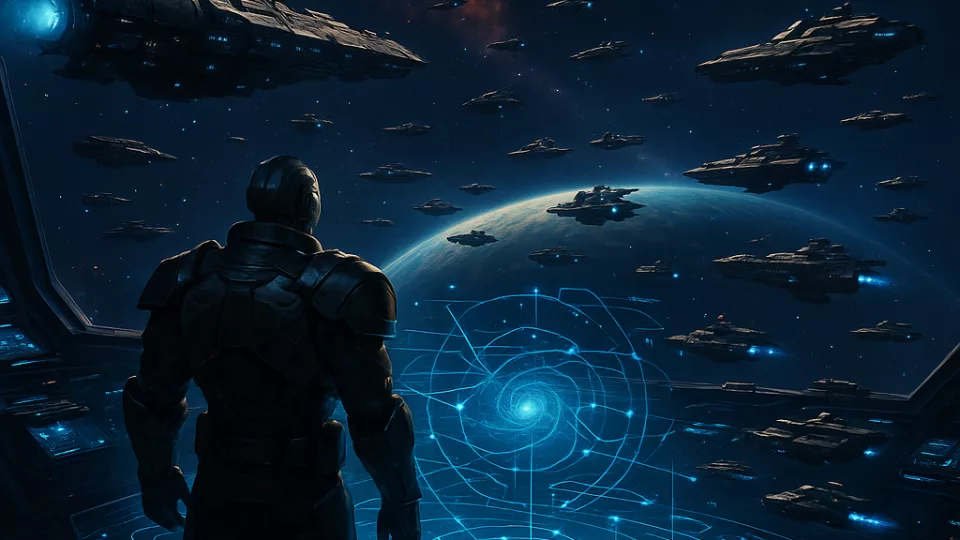
In War for Galaxy, it's easy to fall into a familiar trap of any space strategy game: you see a stronger ship, a more expensive ship — and decide that it must be the key to victory. It seems logical: if the unit is stronger, the fight should be easier. But in a space battle, this approach quickly starts to fail. Victory is not so much a number on the screen as it is the assembly of your War for Galaxy fleet: which ships are included, how they work together, and how ready the composition is to respond to the opponent.
The main mistake is assembling the fleet out of habit. Clicking a familiar template, sending ships to battle, getting an unpleasant result, and wondering: "How so, I had stronger ships?" The answer often lies not in a single power number, but in the composition. The fleet makeup influences the battle outcome. Even an impressive collection can be vulnerable if it is predictable, one-sided, or poorly suited to the specific situation.
This is why War for Galaxy appeals to players who enjoy space games, browser strategy games, online strategy games, and space combat games. Here, not just the moment fleets clash is important, but the preparation beforehand. A good admiral wins part of the battle even before the first shot — by deciding what exactly to send into space and why.
Below are five practical questions to ask yourself before assembling your fleet. They don't require complicated spreadsheets nor do they turn the game into dry calculation. Their purpose is simpler: to help you avoid autopilot play, not to chase only "the strongest" ships, and to evaluate your fleet as a system.
Question 1. What is the purpose of this fleet?
The first check doesn’t start with the hangar or choosing the most expensive ship, but with the goal. Before placing ships into formation, ask yourself: what result should this fleet achieve? Not in the general sense "to win," but more specifically: why are you taking exactly this composition, what idea do you want to realize, and what risk are you ready to accept.
In space, strategy, and galaxy games, the solution often begins before the battle. The same ship lineup doesn’t need to be optimal in every situation. What worked once may be redundant, too costly, or too obvious in another encounter. If you repeat a habitual build without reassessment, part of your strategy essentially goes on autopilot.
A good starting filter before assembling a fleet looks like this:
- What must this fleet accomplish? Not just "be strong," but fulfill a clear combat task.
- Why am I choosing these specific ships? Each part should have a reason beyond just high cost or impressive power.
- What if the battle doesn’t go as expected? If the entire plan hinges on one decision, the composition may be too fragile.
- Am I copying an old build without checking? Past success is useful as a hint but is no guarantee of future victory.
A task-oriented fleet differs from one assembled "from all the best." In the first case, ships become tools serving an overall plan. In the second, it’s just a collection of units hoping to win based on numbers. This approach can work in War for Galaxy, but relying solely on it is risky.
Question 2. What counters exist against the ships I’m depending on?
The second check is the most important for those who favor one favorite type of ship. In War for Galaxy, every ship type has counters. This means no single strong type is a universal solution on its own. A confident move can be met with a perfect counter if the opponent understands what you are building your fleet against.
Counters aren’t just abstract theory for players who love endless stat comparisons. They are the practical reason why space battles can turn not because of total power numbers, but because of composition. You might invest heavily in one powerful type, build your entire plan around it, and then face a counter that sharply reduces your main idea’s effectiveness.
Before assembling your fleet, ask yourself a tough but helpful question: how can I be punished? Not "how strong my fleet looks," but rather "what answer against it would be most painful." This mindset is familiar to players of real-time strategy games and space combat games: victory depends not only on reaction, but on how well you pre-calculated possible counters.
- Which ship type am I betting on primarily? If the whole plan relies on one solution, the opponent can read your fleet easier.
- What counter can meet this type? You don't need to know the opponent's fleet perfectly — it's important to understand your main vulnerability.
- Is the fleet too one-sided? A homogeneous mass may look impressive but often becomes an easy target for the right counter.
- Are there elements in the composition that reduce risk? A good build doesn't have to include "a little of everything," but it must endure imperfect matchups.
- What if my main type meets its counter? If the plan collapses afterward, the fleet is structured too greedily.
A strong ship or ship type does not guarantee victory. It matters not how fearsome a single unit looks, but how it fits into the overall composition and which risks are covered around it. The right counter to the opponent’s fleet can change the battle’s outcome — which is why automatic fleet assembly in War for Galaxy is risky.
Question 3. Am I overestimating expensive and "strong" ships?
One of the most common mistakes of beginners is seeing a ship as a standalone star of the fleet. This one is stronger, that’s pricier, so it must decide the fight. This logic is understandable, especially if you come from spaceship games or space MMO games where building the mightiest armada and sending it forward feels natural. But in War for Galaxy, ship cost doesn’t equal automatic superiority.
Power of a single ship also doesn’t mean it will be useful in any situation. The key principle of the game sounds paradoxical, but makes fleet assembly interesting: the weak can kill the strong, and the cheap can kill the expensive — but only with the right fleet composition. The key word here is not "weak" or "cheap," but "composition."
An expensive ship without a thoughtful place in the composition can be not an asset but a costly mistake. If the entire battle plan relies on one powerful element, the opponent simply needs the right answer to nullify your significant investment. This doesn’t mean expensive or strong ships aren’t needed. It means they must be part of a plan, not a substitute for a plan.
Before betting on the "strongest" option, ask yourself:
- Is the whole plan built around one expensive element? If yes, the fleet may be strategically fragile.
- What happens if the opponent finds an answer to my main ship? If the composition falls apart, that’s a warning sign.
- Are there ships in my fleet that help expensive units shine? Power matters when integrated into the overall system.
- Should I redistribute the composition? Sometimes simpler solutions make a fleet more resilient than one loud "heavy hitter."
Building a fleet according to "the more expensive, the better" is like playing strategy without strategy. A single ship might look impressive, but its value should be judged not in isolation but by its role in the formation: what it covers, where it's vulnerable, how dependent it is on support, and how painful its loss would be.
Proper War for Galaxy fleet assembly begins when the question "which ship is the strongest?" is replaced by "how does this ship work with the others?" That’s when cheap can outperform expensive, and weak can punish strong.
Question 4. Is my result a composition, not just a collection of ships?
There is a big difference between "I added all the powerful-looking ships" and "I assembled a lineup ready for battle." In War for Galaxy, this is especially evident: victory depends on the right fleet composition, not just the attractive sum of power. A collection of expensive or strong units alone doesn’t make a fleet dangerous. Sometimes it just makes mistakes costlier.
A good composition means your fleet has a clear idea, but doesn’t collapse at the first proper counter from the opponent. If you lean too hard on one ship type, the rival has an easier time reading your plan. Since every type has a counter, a homogeneous or poorly balanced fleet can face an unpleasant scenario: there is power, resources invested, formidable ships, but the composition is too predictable.
Before sending your fleet, try organizing it not by "expensive or cheap," but by composition:
- Main component. What holds your plan? What ship type does the main job in this build?
- Supporting elements. Are there ships in the fleet that prevent the main idea from being too obvious or one-sided?
- Counter-check. What happens if the opponent picks the right counter against your main type?
- Dependency check. Does the entire fleet hinge on one scenario where everything must go perfectly?
- Readability check. Does the composition look like one correct response from the opponent can break the whole battle?
This is the essence of fleet assembly: you don’t just pile ships together, you build a working scheme. In browser strategies and online strategy games, often the winner is not the one who chose the most expensive option first, but the one who thought about weaknesses in advance. This applies to browser strategy games and online strategy games in general: the lineup must endure hits, not just look good before battle.
If after review the fleet looks too homogeneous, too dependent on one type, or too easily countered, it’s better to rebuild it before the fight. In space, it’s cheaper to fix your composition beforehand than to watch "the strongest" ships lose simply because you assembled a collection, not a fleet.
Question 5. What will I check before sending the fleet into battle?
The final check is not to doubt every decision, but to avoid sending the fleet into battle on autopilot. Before hitting the attack button, take a short pause and go through five points. In good space games and space games, victory doesn’t go to the one who just piled on more power, but to the one who understands why each ship is in the fleet.
- Purpose. Am I assembling the fleet for a clear task or just sending everything that looks strong?
- Counters. What can answer my main ship type, and do I have a plan for that case?
- Cost of mistake. Have I overestimated expensive ships? Is the composition still effective if the key element faces the right counter?
- Balance. Is this a cohesive composition or a group of notable units easy to read and punish?
- Risk. Do I understand what my plan rests on and what happens if the battle doesn’t go perfectly?
These questions take less than a minute but help you think like a strategist. They bring focus back to the main conclusion: in War for Galaxy, victory is not so much a number as a fleet composition. The weak can defeat the strong, the cheap can beat the expensive, but only when the composition works as a system. That’s why the game appeals not only to fans of large armadas but also to those who like to calculate moves beforehand.
If you want to test your decisions in practice, head to the official War for Galaxy launch page. If you prefer to start by installing the client, use the download page. Assemble your fleet, ask yourself these five questions — and only then send your ships to battle. Don’t play by habit: build a composition, look for vulnerabilities, consider counters, and turn every space battle into a deliberate strategic decision.