
How to Read Battles Through Counters: The First Step to Smarter Decisions in War for Galaxy
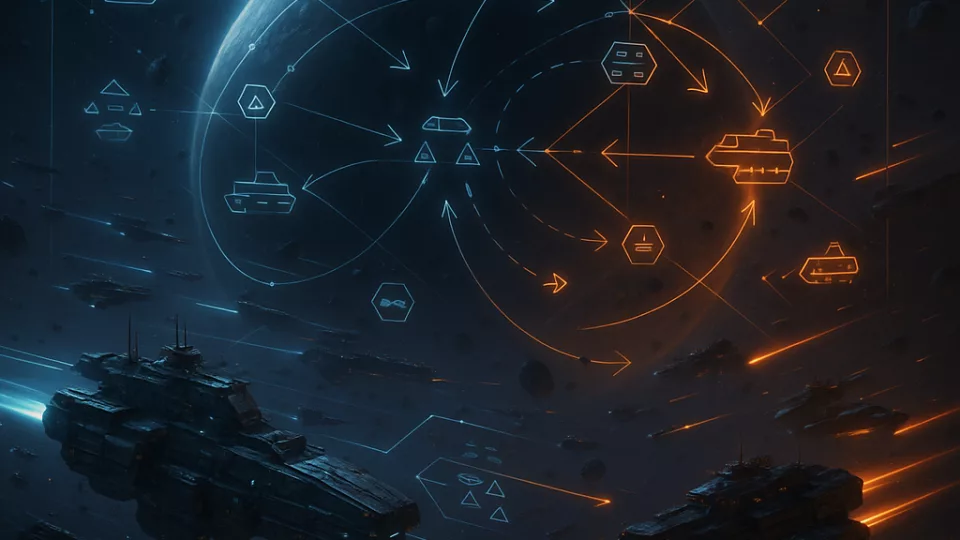
In War for Galaxy, it's easy to fall into the trap of a simple evaluation: who has the bigger fleet, who has more expensive ships, who looks more powerful overall. At first glance, it seems enough to predict the outcome of a space battle. But this is where many players go wrong: they see the numbers but don’t see how these numbers interact against each other.
Battle in War for Galaxy should be read not as a dry power comparison but as a clash of builds. It's important not just how many ships there are, but what types of ships participate in the fight and how they counter each other. Each ship type has a counter — and this immediately changes the logic of decision-making.
If you look only at overall strength, you might miss the main point: a fleet may look formidable but be assembled in such a way that the opponent finds a weak spot. Conversely, a composition that looks modest in cost or perceived power can perform better if built as a response to the opponent's threats. Victory here is not so much about the numbers as it is about the fleet composition.
This depth is what makes the game interesting for those who enjoy space games, browser strategies, and online strategies—not only because of progression but for tactical choices as well. You don’t just send ships forward and watch what happens. You start to ask: how does my composition respond to the enemy’s? Where is my imbalance? Does my fleet have answers to the main threats?
This article is the first step toward smarter decisions. We won’t invent hidden formulas, specific ship classes, or universal recipes. Instead, we'll explore a fundamental skill: how to read battles through counters and stop evaluating space battles based solely on "bigger means stronger."
What Is a Counter and How It Changes the Meaning of a Space Battle
A counter in War for Galaxy is not a magic word or a "win by button press" guarantee. It's simple tactical logic: one ship type is more effective against another type. Not because it's always stronger, more expensive, or looks scarier, but because in a particular clash it better addresses a specific threat.
The main idea is simple: a ship is not strong "in absolute terms." Its value shows itself relative to what stands opposite. The same fleet can confidently fight against one composition and struggle unpleasantly against another if the opponent has the correct counter. Therefore, reading the battle by total power alone is like looking at a space battle through a foggy window: you see the general silhouette, but miss the meaning of what’s happening.
In space ship games, especially in strategy games, space combat games, and spaceship games, beginners often start by asking: "Who has more power?" This is a natural start but quickly hits a ceiling. A more useful question is: "How does this composition respond to the opponent’s composition?" This is where real reading of battles through counters begins.
If each ship type has a counter, then battles aren’t just clashes of resource totals or costs. They are clashes of fleet builds. One might have answers to key threats, the other might have an impressive numerical advantage but perform poorly against a specific enemy. That’s why one battle might seem "unfair" at first glance: the seemingly weaker composition sometimes wins not by chance but because it hits the right matchup.
Counters change the way you think. Instead of "I need to build more," players start thinking: "What am I missing in my composition?", "Which enemy ship types do I have answers to?", "Which part of my fleet is vulnerable now?" This is not a race of numbers anymore, but a tactical challenge that good browser strategy games and online strategy games are loved for. You can learn more about the project on the official War for Galaxy page.
Why the Weak can Defeat the Strong, and Cheap can Beat Expensive
In War for Galaxy, there is an important idea players often only understand after several unpleasant defeats: "Stronger" doesn’t always mean "will win." A weak ship or more modest composition can destroy something that looks more powerful on paper. A cheap fleet can break apart an expensive one. But not because the battle turns into a lottery or there’s a secret button somewhere. It all comes down to counters and how wisely the fleet is assembled.
If one ship type effectively counters another, then raw cost doesn’t tell the full story. An expensive composition can be threatening, but if it poorly addresses your threats, its price won’t save it. A strong part of a fleet might look impressive, but against the correct counter, some of its advantage disappears. That’s why victory is less about the numbers and more about the fleet build.
It's important not to go to the other extreme. A counter isn’t an automatic win. You cannot just say: "I have an answer — so I win." It’s not a single idea that works, but the whole composition together. If a fleet is one-sided, lacks the necessary answers, or closes one threat but completely fails against another, even a successful counter might not carry through the battle.
The right approach sounds like this: every element in the composition must have a purpose. One ship type may be needed as a response to a specific threat, another to keep the composition from being too predictable, a third to prevent the enemy from imposing their scenario. We aren’t talking about specific ship names or formulas because the basic principle is broader: a fleet wins when its parts effectively counter the enemy’s composition, not just when expensive units sit next to each other.
That’s why after a defeat, it's more useful to ask not "why was my power low?" but "what was my composition actually countering?" Perhaps the problem wasn’t the number of ships. Perhaps the fleet was pricier but lacked the right counter. Or the opposite: the opponent chose a cheaper solution but it hit your weak spots more precisely.
- The weak can kill the strong if its role fits correctly against the threat.
- The cheap can kill the expensive if the expensive fleet doesn’t have a proper counter.
- Counters operate within the composition: one successful element doesn’t replace a well-thought-out build.
- The main question before battle is not "how much does it cost?" but "how does this fleet answer the opponent’s fleet?"
Tactics start when you stop measuring battle by a single total and begin to see a clash of decisions. Whoever better understands threats, assembles better answers, and doesn’t lose advantage to a one-sided composition has a chance to win, even when the odds seem against them.
How to Read Battles Through Counters: A Basic Player Algorithm
Reading battles through counters means looking primarily at the fleet composition. In War for Galaxy, every ship type has a counter, so the same fleet might seem powerful on paper but fail to respond to a specific threat. This logic is familiar to fans of real-time strategy games, galaxy games, or space MMO games: the winner is not the one who simply piles up the most ships but the one who understands how their build answers the enemy’s.
A basic algorithm can be applied after each fight or before sending the next fleet. It helps you move away from the conclusion that "we needed more power" and see the true cause of the result.
Identify the ship types involved in the battle.
Don’t start analyzing with "who has more power?" Lay out the battle by composition first: which types were on your side, which on the opponent’s, which were many, which few. When you only see the overall number, the battle appears a head-on clash. When you see ship types, the battle becomes a set of matchups.Understand which ships should answer others.
Since every ship type has a counter, each composition has a "threat-response" logic. Your task is not to guess a secret formula but to ask the right question: what parts of the opponent’s fleet was my fleet covering? If there was no answer, defeat might have happened not because the fleet was small but because it fought with the wrong tools.Check if your fleet is too one-sided.
One common trap in strategy games is to build a lot of what you like or think is strong and assume that’s enough. But if the composition is too skewed, the opponent can easily find a counter. In space battles, such imbalance is especially dangerous: the fleet may look impressive and expensive but fail badly versus the right counter.Assess whether you have answers to the main threats.
You don’t have to cover everything perfectly. It’s important to identify key threats. If the opponent pressed hard at a certain composition part, ask yourself: did I have ships designed to hold it off? Did they play a significant role in my build? Or were they just "for show," while the bulk of the fleet didn’t solve the problem at all?After battle, form your conclusion through composition, not by complaining about numbers.
A weak conclusion: "I had too few ships" or "his fleet was more expensive." This might sometimes be part of the problem, but it teaches almost nothing. A strong conclusion sounds different: "I lacked the right counters," "my composition was too one-sided," "I reinforced the wrong type," "the opponent had an answer to my main focus."
Imagine the battle as a dialogue of two builds. One fleet asks: "How will you respond to my main focus?" The other either answers with the correct counter or faces trouble. That’s why in War for Galaxy it’s important not just to look at how many you built but why each element is in the composition.
Before the battle, look at your fleet as a commander; after the battle, as an analyst: what worked, what failed to cover a threat, which type was surplus, what answer was missing. This turns reading battles through counters from theory into habit. You can try this approach right now in your browser at the official game page or the War for Galaxy download page.
Common Mistakes: How Players Give Away the Advantage
Many defeats begin before the first shot — the moment a player views the fleet just as a simple sum of power, cost, or volume. It seems logical: more expensive means better, more means more reliable, stronger means you will win. But in space battles through counters, this logic often breaks.
The main mistake is to read battles as number comparisons, not as clashes of fleet builds. Since every ship type has a counter, the question is not how impressive the build looks on its own. The question is whether it has answers to what the opponent brought.
- Mistake #1: Believing an expensive composition is always stronger. An expensive fleet may look solid, but that’s not a victory guarantee. A cheap build can punish an expensive one if it’s assembled as the right answer.
- Mistake #2: Thinking strong always crushes weak. A powerful ship or a fleet that looks strong isn’t invulnerable. The weak can kill the strong if it fits the right role and targets proper points.
- Mistake #3: Reinforcing only one ship type. When players push "more of the same," they often make their fleet predictable. One-sided builds can dominate in some situations but falter sharply when the opponent prepares a counter.
- Mistake #4: After defeat, concluding solely "not enough fleet." Sometimes the problem isn’t quantity but a lack of the right counters. Adding more may just repeat the same error, only more expensively.
- Mistake #5: Forgetting the opponent is thinking too. In browser and online strategies, it’s dangerous to treat the enemy as a static target. They can adapt their build, seek counter-fleets, and punish familiar patterns.
An ill-constructed composition can lose even with seeming superiority in power or cost. So before battle, it’s useful to ask yourself not just "Will this be strong enough?" but also: what are my fleet’s answers to the threats? Is my build too one-sided? Does the opponent have obvious counters against me?
Tactical advantage often goes not to the one who amassed the biggest fleet, but to the one who read the clash of compositions the best. When you stop worshiping numbers and start seeing counters, every battle becomes clearer — and mistakes cost less.
Conclusion: Smart Decisions Start Before, Not After, Fleet Assembly
In short, how to read battles through counters means not looking for excuses after losing but understanding in advance what your fleet will counter in the enemy fleet. In War for Galaxy, victory is not reduced to "I have more" or "I have more expensive." The key is how well your composition covers the threats the enemy brings.
Counters are the first step toward conscious tactics in space battles. Each ship type has a counter, so any build should be viewed not in isolation but through the clash with a specific opponent. The weak can kill the strong, the cheap can kill the expensive — but only if the composition is properly built, not just randomly assembled to be "as big as possible."
Before your next battle, pause for a minute and ask yourself three questions:
- What is my fleet designed for? Does it respond to the opponent’s threats or just look impressive on numbers?
- Is there a composition imbalance? Have I built too much of one solution, leaving a weak spot uncovered?
- What am I testing in this battle? Ship count, fleet cost, or the correctness of counters?
This approach quickly shifts your mindset. You start seeing the battle not as a lottery or just a comparison of power, but as a contest of two compositions. The better you read this contest before takeoff, the less you’ll be surprised by the result after the clash.
If you want to apply this algorithm immediately—jump into War for Galaxy in your browser or install the game from the download page. The mobile version is also available on Google Play and App Store.
In a good galaxy game and space MMO games, the winner is not just the one who builds the most but the one who better understands how to respond to the enemy fleet. Make your next battle not just a test of power, but a test of mindset: read counters, review your build, and send your fleet out with a plan.