
How to Assess an Enemy Fleet Before Choosing Your Lineup
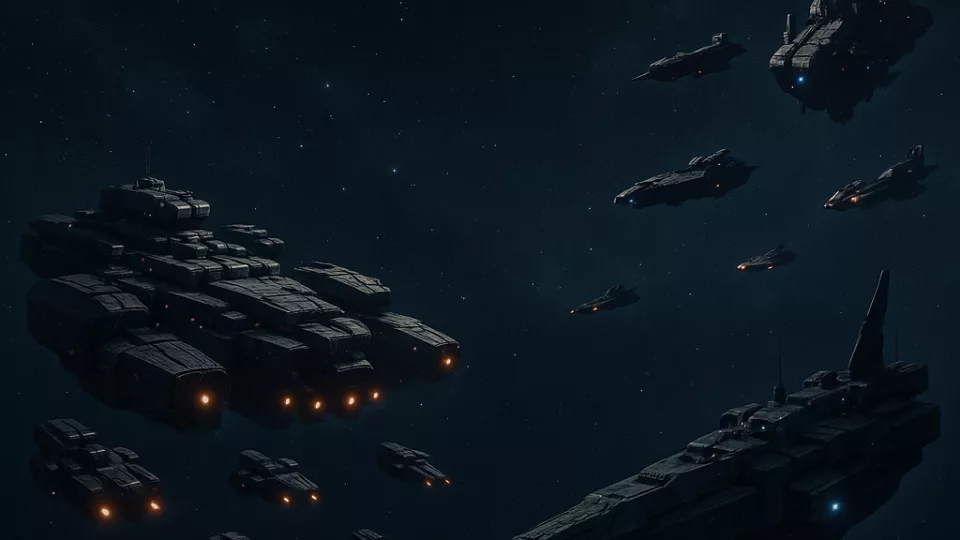
Before a battle, it’s easy to start with the familiar question: What is the strongest fleet? But in War for Galaxy, a more useful question is: What types of ships make up your opponent’s fleet, and how will your lineup interact with it? A universal lineup that works equally well in every situation is an unreliable basis for your decision.
You should choose your fleet after assessing your opponent. One ship type may be a suitable response to the lineup you’ve seen, while another may not have the desired effect, even if it seems stronger on its own. Overall numbers aren’t the only thing that matters: the combination of ships and the counter interactions between them are important too. The right lineup can shift the balance of power, though it cannot guarantee victory on its own.
So don’t start by looking for the “best ship.” Start by asking what lineup you’re preparing to face. This approach helps you make deliberate decisions: assess your opponent’s fleet first, then choose your own. It’s a useful starting point for playing War for Galaxy and for any strategy game where outcomes depend on the composition of your forces.
Why Counter Interactions Matter More Than Overall Strength
A fleet’s overall strength can give you an idea of its scale, but it doesn’t explain by itself how its ships will fare against one another. Individual stats matter, but so do the types in the lineup and how they interact with the enemy fleet. Every ship type has a counter, so comparing two numbers doesn’t always show which lineup will be more effective.
This is the logic behind counter-picking: don’t look for the most powerful ship in general; consider what it will be up against. With the right lineup, a weaker ship may destroy a stronger one, and a cheaper ship may prove dangerous to a more expensive one. That doesn’t mean strength and cost don’t matter at all. They simply don’t answer the main question: how useful is this ship in this particular lineup and against this particular fleet?
Imagine two options. One consists of ships that look impressive individually; the other combines ship types with the opponent in mind. The first option may look more convincing by its overall rating, but the second could be more effective because of favorable counter interactions. This illustrates the principle; it doesn’t promise a particular outcome. A good idea alone is no guarantee of victory.
That’s why you should assess the fleet as a whole. Ask which types it includes and whether their combination fits the task. If you judge it only by one expensive ship or the sum of its stats, it’s easy to overlook the importance of counters. Conversely, a lineup with more modest numbers isn’t necessarily weak if it’s well suited to a particular opponent.
In War for Galaxy, victory is less about chasing the highest number and more about building a fleet. Cost and individual strength should be considered as part of the bigger picture, not as an automatic answer to what you should choose. Counter-picking makes your decision more informed, but it doesn’t make the battle’s outcome a foregone conclusion.
How to Assess an Enemy Fleet: Four Questions
Before choosing your own lineup, examine what you know about your opponent’s fleet. You don’t need to guess every detail. Your goal is to understand its general structure, spot possible counter interactions, and avoid confusing observations with assumptions. Work through these four questions.
- Which ship types are present? Note the types you actually know are there. If you can’t see the full lineup or your information is limited, make a note of that separately. Don’t fill in the gaps with guesses as though they were confirmed. The difference between “this type is confirmed” and “it might also be there” matters because it affects how reliable your plan will be.
- What appears to be the backbone of the fleet? Look at which types stand out and what the opponent’s lineup may be built around. This is an assessment, not a final conclusion: the noticeable presence of one type doesn’t reveal the opponent’s entire plan. It helps to divide your notes into two parts: an observation—“this type is present”—and a hypothesis—“it may form the backbone of the fleet.”
- Which counter interactions should you consider? The combination of ship types matters, not just the list of ships. Think about which elements of the lineup may be significant and what responses you should consider. Don’t attribute specific abilities or guaranteed counters to individual ships without reliable evidence. The point is to understand the general logic of the interactions, not to invent a matchup chart.
- How balanced will your response be? Compare your planned counter-pick with everything you know about the fleet, not just one prominent element. Check that your response isn’t built around a single type and that it accounts for different parts of the opponent’s lineup. If information is limited, allow for uncertainty and don’t treat a narrow assumption as a reliable plan.
It’s also useful to ask yourself which information actually influenced your decision. If your response rests on a single unconfirmed assumption, consider an alternative. If you’re relying on known ship types and understand why your chosen combination should account for them, the logic of your plan is clearer. This won’t predict the outcome of the battle, but it can help you make more consistent choices.
This assessment doesn’t require you to invent details about your opponent. First separate the known lineup from your hypotheses, then consider its likely backbone and possible counter interactions. Only after that should you choose your own fleet.
How to Turn Your Assessment into a Fleet Lineup
Once you’ve reviewed the known elements of your opponent’s lineup, don’t rush to pick the strongest or most expensive ships. Turn your assessment into a plan: which counter interactions should you account for, and what combination of types can address them? Counter-picking isn’t about finding one universal solution; it’s about how well the ships work together and match up against the enemy fleet.
- Write down what you know. List the ship types you have reliable information about and note your assumptions separately. That way, a guess about the fleet’s possible backbone won’t quietly turn into a fact that your entire plan depends on. If your information is incomplete, take that into account when comparing options.
- Identify the important counter interactions. For the most prominent elements of the lineup, consider which types might counter them. You don’t necessarily need a separate counter for every part of the fleet. Start by assessing the lineup’s overall logic: which interactions should you account for so that you don’t choose ships in isolation from your opponent?
- Build your response around those interactions. Choose a combination of types that accounts for the opponent as a whole instead of simply adding the ship with the highest individual strength. An appropriate response should be part of a well-considered lineup. What matters isn’t just how impressive one ship looks, but whether your chosen combination fits the known enemy lineup.
- Compare your options and check your reasoning. Ask whether your lineup responds to the types you’ve seen, or whether your decision rests on one overall number or one expensive ship. If the entire idea depends on a single element, check whether there’s a convincing alternative. Compare options based on the logic of the lineup, without assuming that a higher cost guarantees an advantage.
For example, against a particular element of an enemy fleet, a suitable counter may be more useful than a ship that is stronger or more expensive on its own. This doesn’t promise victory or describe a specific ship pairing; it illustrates the principle. What matters is not comparing two numbers, but understanding which combination takes the opponent’s lineup into account.
If you’re unsure, try explaining your decision in one sentence: “I’m choosing this lineup because it accounts for these known types and possible counter interactions.” If all you can say is “it’s stronger” or “it costs more,” your assessment probably isn’t finished. Return to the known enemy lineup and check which interactions you may have overlooked.
Use this sequence before a battle in War for Galaxy: facts first, then counter interactions, then your own lineup, followed by a review of your plan. This order can’t guarantee a particular outcome, but it can help you avoid choosing at random.
Common Fleet Selection Mistakes and a Quick Pre-Battle Checklist
Even a fleet that looks strong can be a poor choice if you focus on just one number. Before battle, check whether you’ve fallen into one of these common traps:
- Looking only at overall strength. A numerical rating can’t replace an analysis of how ship types interact with the enemy lineup. Fleet composition matters at least as much as an individual number.
- Assuming an expensive ship is the best response. Cost alone doesn’t guarantee an advantage. With the right lineup, a cheaper ship may be effective against a more expensive one.
- Building a fleet without considering the opponent. Don’t automatically look for one lineup for every battle. First assess the enemy ship types you know about, then decide how to respond.
- Treating a guess as a fact. Separate confirmed information from assumptions. If you have little data, don’t base your entire plan on one unconfirmed theory.
Use this quick checklist before battle:
- Record the known enemy lineup and note where information is missing.
- Identify the counter interactions that are important to consider.
- Choose a combination of ship types to match the lineup you’ve seen, not an abstract idea of maximum strength.
- Review your decision: does it depend on one number, one assumption, or one expensive ship?
In space games and online strategy games, it’s useful not just to build an imposing fleet, but to understand why you chose that particular lineup. Assess what you know about your opponent, consider possible counters, and only then make your decision. Explore War for Galaxy and try this approach the next time you choose a fleet: don’t look for a universal answer; build your lineup with the opponent in mind.