

Marauder and the “Theft” Mission in War for Galaxy: How to Steal Antimatter, Why Raids Come Up Empty, and How to Defend Yourself
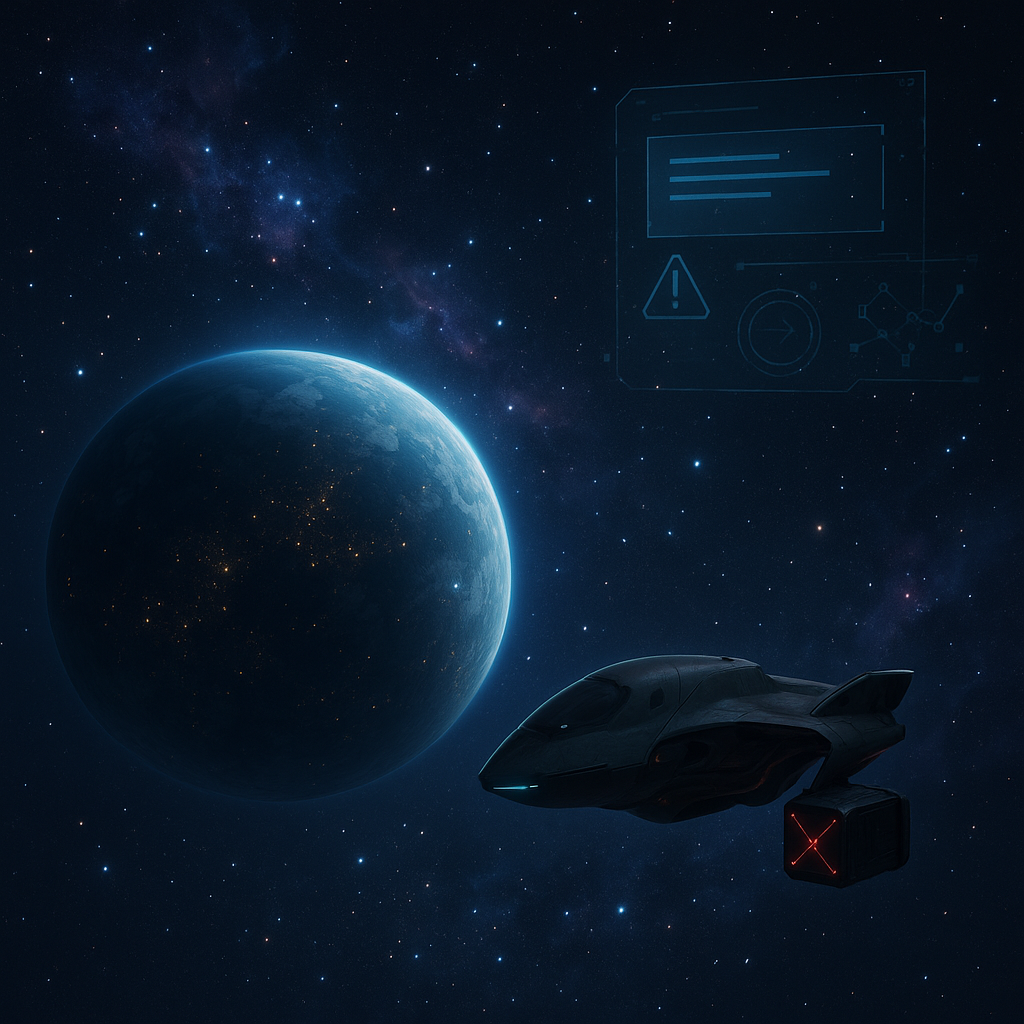
Marauder and the “Theft” Mission in War for Galaxy: How to Steal Antimatter, Why Raids Come Up Empty, and How to Defend Yourself
The Marauder in War for Galaxy is frequently the subject of questions in the game chat. Beginners try to understand whether it’s possible to steal antimatter from their own colony, why a ship flew out and returned without the expected loot, what to do if an enemy Marauder has appeared on your planet, and where to look for the player who sent it. If you’ve stumbled on this mechanic as well, that’s normal: it really doesn’t resemble ordinary resource transport or a fleet attack.
You can consider War for Galaxy as a cosmic online strategy and a browser galaxy game, where economy, fleet, notifications, and timing decisions are closely interconnected. At first glance, it’s familiar territory for fans of space games, browser strategy games, online strategy games, and space MMOs: you develop planets, manage ships, monitor resources, and respond to other players’ actions. But the Marauder breaks the usual logic. It’s not a transport, not a combat ship, nor a universal fleet tool.
The main idea to start with: The Marauder in War for Galaxy is a special unit for one task only: the “Theft” mission to steal antimatter. It’s not used for attack, defense, reconnaissance, debris collection, or interplanetary logistics. Below, we’ll calmly break down the mechanic step by step: what the Marauder can do, how “Theft” is initiated, why a raid may come up empty, and how to quickly react if such a ship arrives at your planet. If you want to cross-reference or launch the game, use the official War for Galaxy site or go directly to the game client.
What Is the Marauder: A Special Ship Without a Combat Role
The Marauder is not a typical transport ship, light raider, or “clever combat ship.” It’s a specialized ship designed exclusively to perform the “Theft” mission. Its operational cycle is very narrow: it launches from its home planet, travels to another player’s planet, attempts to steal antimatter according to the mission’s rules, and then returns home.
A common mistake by beginners is to perceive the Marauder as a regular ship familiar from strategy or spaceship games. It seems logical: if there’s a ship, it can be sent into attack, set for defense, transferred between colonies, or used as a cargo transporter. But the Marauder doesn’t work like that. It exists separately from the combat system and does not replace transports, scouts, collectors, or strike fleets.
- You cannot send the Marauder into attack. It is unsuitable for standard attacks on planets.
- It does not participate in planet defense. If an enemy fleet comes to your planet, the Marauder does not engage in battle and does not assist defenders.
- The Marauder is not destroyed when attacking its own planet. It is excluded from battle calculations.
- You cannot relocate the Marauder between your own planets. Each such ship is bound to a specific planet.
- Reconnaissance, debris collection, and transportation are not its tasks. Separate ships and missions are required for those.
An especially important rule to remember is binding. If the Marauder is on planet A, you can’t simply transfer it to planet B, even if both belong to you. It departs from its home planet, carries out the only available mission — “Theft” — and after completion returns there exactly. Therefore, consider the Marauder as a tool of economic sabotage rather than part of your army or logistics network.
Key Characteristics of the Marauder
| Parameter | Value |
|---|---|
| Purpose | Only the “Theft” mission |
| Cargo Capacity | 50,000 units |
| Fuel Tank | 50,000, equal to cargo capacity |
| Initial Speed | 2,000 |
| Fuel Consumption | 300 antimatter |
| Engine Type | Barion |
| Combat Role | None |
If you need to quickly check parameters in-game, you can view Marauder stats through your personal assistant Hermes. But for practical purposes, it’s enough to remember: this is a one-operation ship, not a universal fleet module.
How the “Theft” Mission Works: Target, Fleet Composition, Extraction Speed
The “Theft” mission in War for Galaxy does not operate like regular transport or attack. It’s a separate economic mechanic: the Marauder flies to an enemy planet, starts pulling out antimatter, accumulates possible loot up to a limit, or finishes the job — then returns home. There are no space battles involved in this scheme.
The first rule: the target of “Theft” must be another player’s planet. Not your own colony or home planet, but specifically an enemy planet. If you need to transfer antimatter between your planets, use standard transports. The Marauder is not for that; it is a theft tool targeting another player’s antimatter.
The second rule concerns fleet composition. To make “Theft” available, the fleet must consist solely of Marauders. Adding a shuttle, transport, scout, collector, or combat ship disables the mission option. The game does not mix this mechanic with attack, scouting, or resource transport, so always check your fleet before launching.
Step-by-step, the mechanic works like this:
- You select another player’s planet as the target.
- You form a fleet consisting exclusively of Marauders.
- You choose the “Theft” mission if it’s available.
- The Marauder flies to the target and begins stealing antimatter upon arrival.
- After completing the mission, the ship automatically returns to its home planet.
A special feature is anonymity. The player receiving the Marauder gets a notification but no information about the fleet owner or the launch location. The target sees the threat but has no direct clue of the Marauder’s origin. The Marauder thus serves not as a combat ram but as a tool of silent economic pressure.
Now the math. The theft pace is straightforward: 2,500 antimatter stolen every 5 minutes. The upper cap per raid is 50,000 antimatter. This matches the Marauder’s cargo capacity of 50,000 units. It cannot carry more in a single sortie.
This is why “Theft” feels different from raids in some real-time strategy or space combat games. It’s not about fleet power or breaking defenses; it’s about target choice, arrival timing, and players’ vigilance to notifications. The Marauder does not win fights — it takes antimatter if left undisturbed.
Why Did the Marauder Return Empty and How to Choose Your Target More Carefully
An empty Marauder raid doesn’t necessarily indicate a bug or hidden random failure. According to confirmed mechanics, it’s quite straightforward: the ship flies to another player’s planet and tries to steal antimatter. But if conditions are unfavorable, loot might be zero or significantly less than expected.
Common Reasons for Empty or Weak Raids
- The target had no antimatter. The Marauder only steals antimatter. If there’s none or the stock is too low, it returns nearly empty-handed.
- The target was poorly chosen. Coordinates can look promising, but that doesn’t guarantee a good antimatter stash. Raiding a “nice target” does not equal profit.
- The defender reacted quickly. After the first theft, the planet owner can drive off the Marauder. If they were online and clicked the button in time, the loot will be minimal or less than you expected.
- You confused “Theft” with transport. The mission is for enemy planets only; antimatter isn’t stolen from your own planets, it is transported normally.
A key beginner mistake is to assume that once the Marauder arrives, it’s guaranteed to return fully loaded. It’s not. This is a risky economic operation, not guaranteed income. In a good online strategy, profit depends not on clicking “Send” but on target choice and situation assessment.
Before launch, don’t send the Marauder blindly to random coordinates. First scout the target to evaluate whether the slot, time, and antimatter spent on the flight are worthwhile. Scouting doesn’t guarantee profit but helps avoid wasting raids where there’s nothing to steal.
Also factor in flight duration. The longer the Marauder flies, the higher the chance the situation changes: the owner logs in, uses or moves antimatter, notices the threat, and quickly drives off the ship upon arrival. For the Marauder, timing and target matter equally.
Don’t forget about antimatter fuel consumption. If you expend fuel, wait long, and end up with little or no loot, the operation might be unprofitable. A practical approach: scout first, estimate time, calculate fuel, then send. The Marauder favors careful commanders; “shooting from the hip” shows quickly that not every enemy planet is a gift.
How to Defend: Notification, “Drive Off” Button, and Loss Limits
If a Marauder flies to your planet, the game doesn’t leave you completely blind: you receive a launch notification. But it doesn’t reveal launch location or fleet owner. You see the threat but not the attacker’s identity or coordinates. Anonymity is part of the mechanic.
After that, it comes down to attentiveness. Upon arrival, the Marauder does not fight or launch a standard attack. It works on a separate schedule: 5 minutes after arrival, when the first 2,500 antimatter is stolen, a “Drive Off” button appears. Click it quickly to stop further theft. Miss the moment and the ship continues stealing up to the raid limit.
The maximum risk per raid is up to 50,000 antimatter. That doesn’t mean you lose that amount every time, but if left unattended, that’s the ceiling. A frustrating detail: antimatter already stolen doesn’t return. Even if you drive off the Marauder immediately after the button appears, the first 2,500 are gone.
Beginners sometimes try to solve this with fleets or defense: build turrets, raise ships, “shoot down” the Marauder in orbit. Under the described mechanics, this doesn’t work. The Marauder does not participate in battles, does not attack normally, and cannot be destroyed by standard planetary defenses. The proper response is interface control and timely clicking of “Drive Off”.
Mini Guide to Defending Against Marauders
- Check notifications on all key planets, especially those storing antimatter.
- Don't keep unnecessary antimatter if you plan to be away from the game for some time.
- After notification, watch the planet closely. The “Drive Off” button appears only 5 minutes after arrival.
- Don’t look for the Marauder in battle. Combat ships and defense do not stop it.
- React quickly. The longer you wait, the closer your losses approach the 50,000 antimatter limit.
The best defense against the Marauder is not a thick wall of turrets but discipline. See the notification, wait for the button, drive it off. The more closely you monitor your planets, the less likely economic sabotage by others will cost you dearly.
Beginner’s Quick Checklist
In short: The Marauder in War for Galaxy is not a strike ship, not a transport, and not a participant in space battles. It’s a precise economic sabotage tool. It works only when you pick the right target, send the right fleet composition, and remember that the other player may also be watching notifications.
- Choose an enemy planet. The “Theft” mission is not for your colonies; transport resources between your planets normally.
- Send only Marauders. Any other ship type will disable the “Theft” mission.
- Assess the target’s antimatter reserve. Scout, estimate flight time and fuel before sending. The raid may not be profitable.
- Monitor notifications on your planets. If a foreign Marauder is sent at you, the game warns without revealing owner or launch coordinates.
- Drive off enemy Marauders quickly. The “Drive Off” button appears after the first theft; the longer you wait, the more antimatter you lose.
What to do right now? Log into the game and check notifications on key planets, especially those with antimatter stockpiled. If you want to try the mechanic yourself, pick a suitable enemy target, send only Marauders, and keep in mind: there’s no guaranteed profit here. As with good browser strategy games, scouting, timing, and attentiveness decide outcomes.
War for Galaxy isn’t just about spaceships and big space battles. The economy can strike as hard as a fleet. So explore basic resource, flight, and ship mechanics on the official War for Galaxy website, watch your notifications, and use the Marauder strictly as intended: quietly, carefully, and without illusions that it can replace your combat fleet.