

Should a Newbie Create an Alliance for Missions? What You Need to Know Before Starting
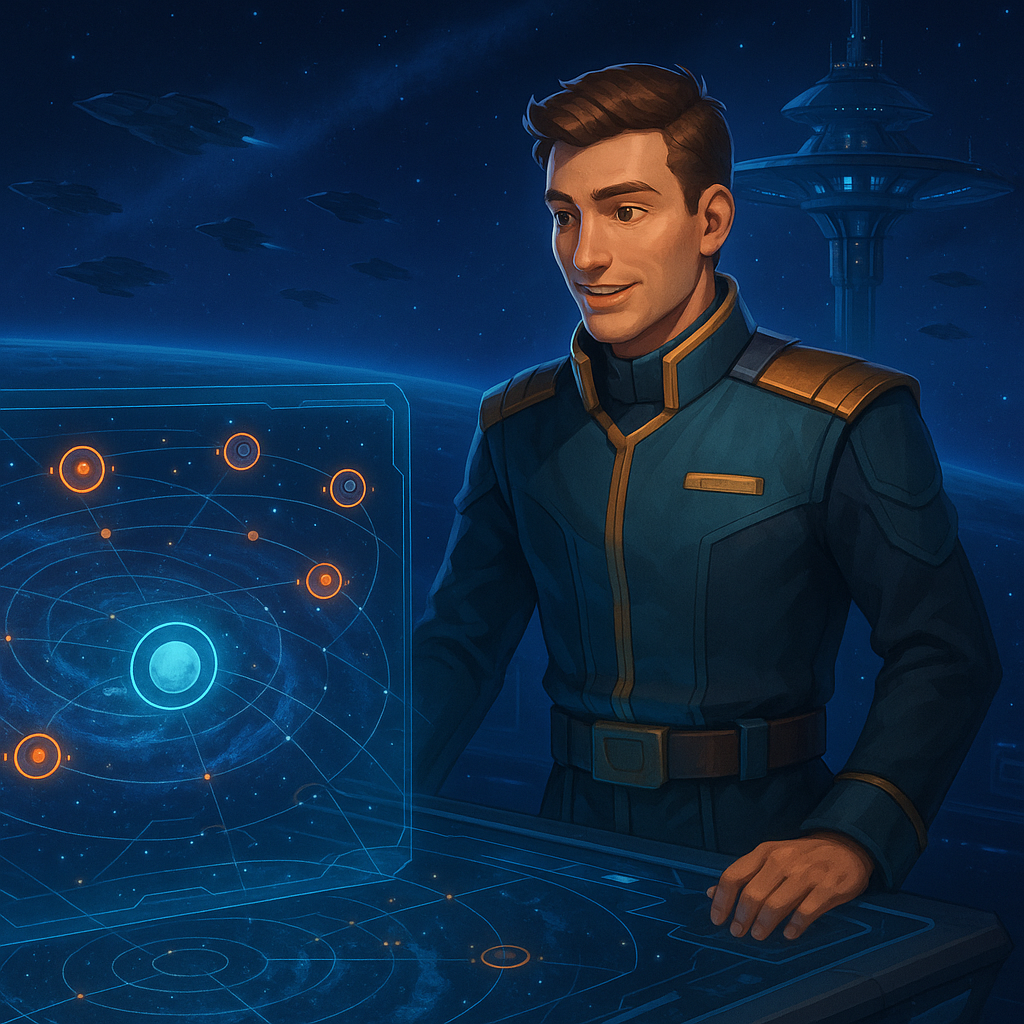
Should a Newbie Create an Alliance for Missions? What You Need to Know Before Starting
Imagine a typical start in War for Galaxy: you develop your first planet, build your economy, accumulate titanium, silicon, and antimatter, gradually assemble a fleet, and explore the interface. At some point, you come across the "Alliance" section. A newbie's logical thought: "If I create my own Alliance, surely additional missions, tasks, rewards will unlock and progress will be faster."
If you thought this way, everything is fine with you. In different strategy games, browser strategy games, and online strategy games, alliances work differently. Sometimes it’s just a chat with bonuses, sometimes a source of clan daily tasks, sometimes a mandatory step to accelerate development. So the question "Does a newbie in War for Galaxy need an Alliance for missions?" is completely normal.
The short answer: it's not worth creating an Alliance just to wait for additional missions. In War for Galaxy, an Alliance is a strong and important mechanic, but its meaning is not to replace personal missions or open a second daily checklist. It is a collective territorial and military structure: shared planets, system control, wars with other alliances, ally support, and coordinated actions on the galaxy map.
In other words, if you need personal Missions, rewards, and calm account progression, it's better to first strengthen your own empire. But if you want team play, space politics, and territorial struggle—then the Alliance becomes a really interesting tool, but you should approach it without haste.
What an Alliance Really Is
Essentially, an Alliance in War for Galaxy is a union of players that creates a shared Alliance multi-account to capture and control territories in the galaxy. A simple analogy: a normal account is your personal empire where you manage your own planets, fleet, research, and resources. An Alliance is no longer a personal yard, but a joint military and territorial structure.
The Alliance multi-account is a shared Alliance account accessible to participants. It's not meant for everyone to get another set of personal bonuses, but for specific team tasks: capturing and holding alliance planets, fighting other Alliances, and controlling territory. The overall game concept is detailed on the official War for Galaxy page, but for a newbie the most important thing is to remember: an Alliance is not simply a button to "get more missions".
That's why War for Galaxy as a galaxy game and space online strategy is closer to influence maps, frontiers, and space battles than the format "created clan—received a bunch of daily tasks." For fans of space games, space MMO games, and real time strategy games this is a strong point: team play is revealed here through territory, decisions, and responsibility.
What an Alliance Actually Provides
The main benefit of an Alliance is access to team play at the level of the galactic map. The shared multi-account is used by Alliance members to capture empty planets, wage wars against other alliances, and control planetary systems. Alliance planets on the map are marked specially and differ from regular player planets, so you can clearly see where personal empire ends and collective territory begins.
System control is not a one-off "captured and forgotten" flag. An Alliance owns a planetary system if its Alliance account has at least one planet there. But if multiple Alliance accounts have planets in one system, the owner is the one with the majority of captured planets. If equal, the system belongs to no one. Therefore, capture and holding majority matter: a rival can equalize and deprive the system owner.
Connected territory grants a synergy bonus. It applies locally—to planets of the multi-account in connected neighboring systems. Controlling 3 neighboring systems grants the Alliance +1.5% titanium, silicon, and antimatter production. Each additional connected system adds +0.5% production to these resources. The maximum basic growth from this synergy is 50%. Sounds tempting, but keep in mind: the bonus must be accumulated by territory, defended, and not lost in war.
Regular players can strengthen their Alliance with resources and ships. From your account, you can send "Transportation" to deliver resources to Alliance planets, and "Relocation" to transfer ships into the Alliance ownership. Thus, the shared multi-account becomes a hub for collective efforts: some deliver resources, others transfer fleets, others monitor threats and plan actions.
There is an important nuance regarding attacks and captures. You can send a standard attack on another Alliance's planet from a normal account, but ownership does not change. This will be a regular combat sortie with looting if victorious, not a territory capture. Only Alliance multi-accounts can capture planets and only from other Alliances. If a multi-account wins an attack on another multi-account's planet, the planet transfers to the new owner along with contents, and the victorious Alliance's rating increases; the loser correspondingly loses those points.
The overall Alliance rating is linked to the number of controlled planets and the value of what the multi-account owns: buildings, ships, and defenses. So every decision carries weight. Capturing a strong planet is not just a beautiful event on the map but growth of the entire structure's weight. Losing a developed planet is a blow to territory, resources, and rating. That's why an Alliance is valuable to fans of space combat games and spaceship games: not just individual ships matter here, but collective strategy.
How to Create an Alliance: Step by Step
If after all this you still want to create your own Alliance rather than join one, start with the requirement: according to new rules, you need 1 Pathfinder. This is a ship used in the context of colonization and Alliance creation. Its cost: 10,000 titanium, 20,000 silicon, and 10,000 antimatter. Build requirements: Dock level 4, Annihilation Engine level 3, and Planet Mastery level 2.
The creation process looks simple:
- Open the "Alliance" window.
- Click "Create".
- Enter the Alliance name.
- Enter coordinates of an empty planet.
- Check the details and click "Create".
After clicking "Create," a Pathfinder launches from the active planet. The Alliance appears not instantly at the time of the click but when the Pathfinder reaches the destination. So check in advance that the coordinates lead to an empty planet.
A special warning for newbies: the parameters of a free planet cannot be known beforehand. The number of fields/sectors and the temperature become known only after colonization. In other words, you cannot choose an "ideal" empty planet by hidden characteristics before flight. Creating an Alliance is not the final reward but the start of a separate game direction where you will have to develop shared planets and take responsibility for the chosen spot on the map. You can check starting conditions right in the game: play.warforgalaxy.com.
Why the Alliance Multi-Account Does Not Replace Personal Progression
The main mistake is thinking the Alliance multi-account works like a second normal account, just "bigger" with extra rewards. In reality, it has strict differences and limitations. The Alliance multi-account has no main planet, you cannot delete planets, Marauders do not appear, it does not affect pirate spawns and cannot attack pirates. An error appears if attempted: "Alliance Codex forbids attacking Pirates".
The most important point for this article's topic: missions, the Shop, Profile, and Reward Calendar are unavailable in the multi-account. There are also no free Hermes tokens and you cannot delete reports. So if your idea was "I'll create an Alliance and get new Missions," the expectation doesn't match the mechanics. Missions are unavailable specifically in the Alliance multi-account.
There is also a crucial limitation on ships. The multi-account can only receive ships through relocation from players. Relocation from the multi-account to normal planets is unavailable, so ships given to the Alliance cannot be simply returned back to a player the same way. Once you transfer fleet to the Alliance, consider it as a resource of the collective structure. Bypassing this by direct transfers between players is also impossible: in War for Galaxy, troops cannot be directly transferred from one player to another in any way.
The Alliance has its own development elements. For example, the basic limit is 10 participants. The technology "Alliance Expansion" has a maximum level of 1, grants +5 participants, and research always takes 3 days. This is a good example that the Alliance is a separate structure with its own rules, not a menu for quick bonuses to a personal account.
What Should a Newbie Choose: Join, Create, or Wait
If you are just starting your journey in War for Galaxy, choose not by emotion but by goal.
- Want to learn, receive advice, and see team play from the inside? Usually it’s wiser to join an existing active Alliance first. This way it’s easier to understand how players coordinate defense, help with resources, plan joint actions, and assess risks.
- Have friends and are ready to manage the structure? Then you can create your own Alliance. But be prepared not only to pick a name but to develop shared planets, look for empty targets, allocate roles, protect members, and participate in system struggles.
- Only need personal progression, daily tasks, Missions, and rewards? Then the Alliance itself won't solve this task. Better first strengthen your personal empire: production, research, fleet, defense, and the habit of regularly checking your planets.
Team play in online strategy games and space MMOs unfolds gradually. The value of an Alliance is not an instant speed-up button but coordination, trust, and territorial control. The better you understand personal economy and combat mechanics, the more useful you’ll be to allies and the fewer mistakes you’ll make managing the shared structure.
A practical next step: jump into War for Galaxy, look at active Alliances, chat with players, and honestly discuss goals. If you still want to create your own Alliance, check for a Pathfinder in advance and pick coordinates of an empty planet. And if you prefer starting on another platform, visit the download page or the official site. The galaxy is vast—but strong Alliances start not with an extra mission, but with a clear plan and reliable allies.